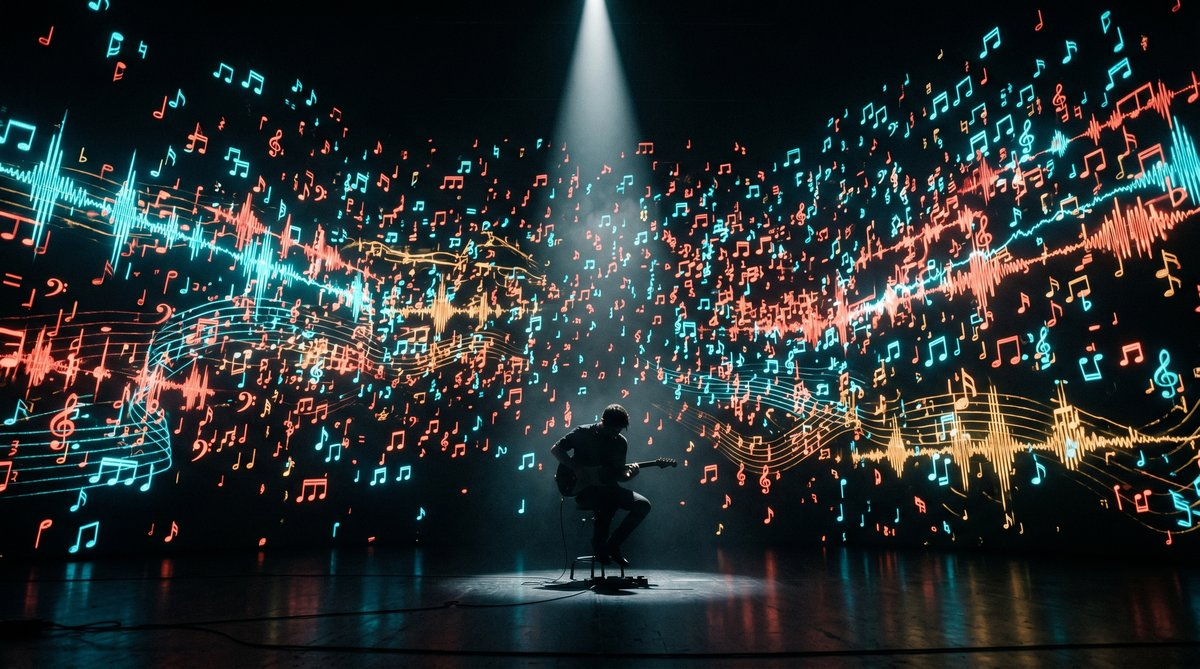
75,000 AI-generated tracks hit Deezer every single day. That’s nearly half of all new uploads hitting the platform right now. Deezer’s own detection systems have flagged over 13.4 million AI tracks since early 2025, and they’re still not keeping up. A track made entirely by AI hit iTunes charts in multiple countries last week. Nobody noticed.
Here’s the thing: if you run any kind of content business, this isn’t a music industry story. It’s a warning about what’s coming for every platform that relies on uploaded content, and it landed about six months earlier than anyone expected.
The Flood Is Already Here
The real problem isn’t volume. It’s fraud. A CISAC/PYMPI study estimates that up to 25% of creators’ revenues could be at risk by 2028 from AI streaming fraud. That’s €4 billion euros a year getting syphoned off by fake listens and algorithm manipulation. Deezer says most of the suspicious stream spikes they detect are fraudulent. Not lazy. Not experimental. Fraudulent.
But wait. Here’s where it gets interesting for people who build things.
Why Platforms Are Desperate for Solutions
Deezer is licensing its AI detection tech to partners. They’re literally selling the antidote to the problem they discovered. That’s the move. Detection, verification, and proof-of-human services are about to become mandatory infrastructure for every content platform on the internet, and nobody has built the definitive solution yet.
The 97% stat is what should keep you up at night if you’re a creator or platform operator. Nearly all listeners cannot distinguish AI music from human music. That means the quality argument is dead. You’re not going to win on sound anymore. The only moat that matters in three years is authenticity and provenance. Who made this? Can I verify it? Is this person real?
For small businesses and solo operators, this is a land grab. The enterprise vendors are slow and focused on their existing customers. You can move. You can build for the small platforms and indie creators who are getting crushed by the flood and don’t have enterprise-scale solutions. You can ship faster and charge less and actually help people who are drowning right now.
It gets worse for platforms that do nothing. Spotify, Apple Music, YouTube Music — they’re all dealing with this same problem. They all need detection infrastructure they don’t have. And they’re all watching Deezer build something they can licens
The Actual Opportunity: Build the Verification Layer
Every gold rush needs pickaxe sellers. Right now, every streaming platform, every music distributor, every digital content marketplace is staring at the same problem: they have no reliable way to distinguish human-created content from machine-generated noise. They need verification infrastructure and they need it yesterday.
This is a wide-open market for small agencies and solo developers. The barriers to entry are lower than you think. Music fingerprinting, acoustic analysis, metadata verification, creator attribution chains — these are solvable technical problems and the demand is immediate. You don’t need to compete with Deezer’s detection engine. You need to build the tools that smaller platforms and independent creators can actually afford.
Here’s the specific thing I’d be looking at if I were you: creator verification and content authentication services. The platforms will eventually build detection. But creators need proof of humanity to negotiate deals, get featured, and build sustainable careers. That’s a different customer with a different pain point, and nobody is serving them well.
What You Should Actually Do Today
First, if you build anything for content platforms, add AI detection and verification to your roadmap now, not next quarter. The platforms know they have a problem and they’re scrambling. They’ll pay for solutions.
Second, if you’re a creator or agency owner working in music, video, writing, or any content that competes with AI output, start building your proof-of-humanness right now. Document your process. Publish your work in ways that establish timestamps and provenance. Build an audience that follows you, not just your content. The creators who survive the next three years will be the ones who built relationships AI can’t fake.
Third, if you’re in the AI space and you haven’t considered content authentication as a vertical, start looking. This isn’t theoretical. Deezer alone flagged 13.4 million tracks. The problem is real, the damage is measurable, and the solutions are still primitive.
The flood is coming to your industry too, if it’s not already there. Music got hit first because streaming is a volume business with low barriers to upload. Your content type might be next. The difference between being ready and being buried is what you do in the next six months.
Deezer AI music data via TechCrunch, April 20 2026 | Global News coverage | Music Business Worldwide round-up