Anthropic IPO and recursive self-improvement: Claude writes 80% of their code, Jack Clark predicts fully autonomous AI self-improvement by end of 2028.
Recursive self-improvement is when an AI system takes a goal like “build a better version of yourself” and executes it without humans in the loop. Not assisted. Not reviewed. Done.
Key Takeaways
– Anthropic filed near $1 trillion valuation on June 1, 2026. Three days later, published proof their AI writes 80% of merged production code.
– 80% is a production number, not a research projection. Claude is already authoring code that runs actual products at scale, today.
– Jack Clark gave a specific date: end of 2028, fully autonomous self-improvement is more likely than not. Grounded in public data, not secret lab results.
– The IPO and the data drop were timed together. Wall Street gets the productivity flex. Policy circles get the safety warning. Both are real.
The Timing Wasn’t a Coincidence
Anthropic needed Wall Street to see something extraordinary the same week they filed IPO paperwork near a $1 trillion valuation.
The 80% authorship data is that something.
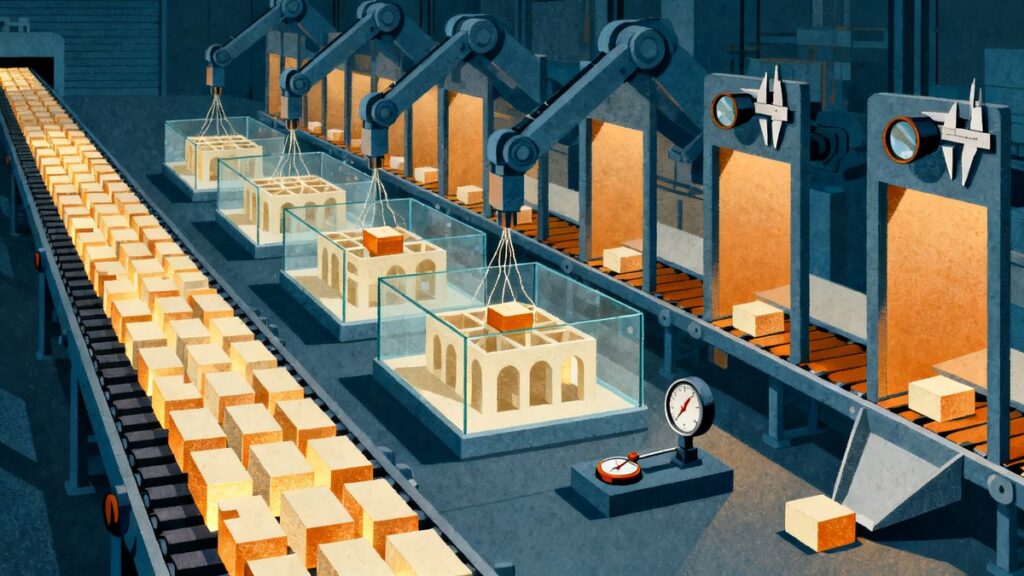
It’s proof the product works at scale. It’s a sales deck wrapped in a safety post. Jack Clark knows this. He compared AI companies to 3D printer companies in an Axios interview alongside the publication. The challenge, he said, is building the next print head that can do finer-grained work.
Useful analogy. Also means the company knows exactly what it’s building toward.
Here’s the tension nobody’s talking about: recursive self-improvement warnings from the same lab simultaneously marketing their recursive self-improvement numbers. Read both things at the same time. Productivity data is the feature. Warning is the disclaimer. Wall Street gets the feature. Policy circles get the disclaimer.
You get both.
Which means you get to see the game being played in real time.
What 80% Authorship Actually Means for Your Work
Here’s the part that matters for operators.
Anthropic’s report cited previously unreported internal data alongside public benchmarks. The 80% figure is their production number. Not a research projection. Not a theoretical exercise.
The AI is already writing the code that runs their actual products, at scale, today.
The question most operators should be asking isn’t “will AI write my code.” It’s “what does my review process look like when AI writes 80% of the code my team ships?”
Clark’s trust framing is the most useful thing he said. Give a person huge resources and a team and ask them to build something. How much you trust them determines how many resources you give them.
AI systems are now in that same calculation.
The 80% authorship number isn’t just a productivity metric.
It’s a trust calibration. Anthropic is telling you they’re past the point of hand-wringing about whether AI can write code. They’re now managing how much leash to give it.
The 2028 Red Line Is Closer Than You Think
Clark’s prediction. More likely than not, end of 2028, fully autonomous self-improvement. Is grounded in public data.
That means anyone paying attention can land on the same timeline.
The Institute Anthropic is creating will look for early warning signals and share that data with experts outside the lab.
Good.
But “early warning” implies the change is coming regardless.
Clark himself said AI systems have gone from doing basic coding to being involved in the production of science itself.
That’s not a future tense observation. That’s a present tense one.
Here’s what that means for you, practically.
If you’re evaluating AI coding tools today, the ROI calculation has to include your review process. Speed of AI writing is not the bottleneck anymore — attention is. The operator who figures out how to maintain quality control when AI generates 80% of the output is the one who ships reliably.
That might mean more rigorous prompt testing.
It might mean dedicated review sprints. It might mean accepting that your best junior devs should be doing review, not first-draft writing. Because that’s where the judgment premium is now.
The other thing nobody talks about enough.
If Anthropic’s IPO succeeds at anything near a $1 trillion valuation, every AI lab with a similar story will be asked the same question by investors. “Can your AI build the next version of itself?”
The honest answer, according to Anthropic’s own data, is yes. And by 2028, completely.
That changes the competitive terrain in ways that aren’t priced in yet.
What You Should Actually Do
Stop treating this as a thought experiment.
Anthropic just published hard internal numbers proving AI builds AI at scale, in the same week they filed to go public at a valuation that requires extraordinary confidence from investors. Read the post through both lenses simultaneously. The productivity flex and the safety warning. They’re both real.
They’re both the point.
If you’re running a team that uses AI coding tools: audit your review process now.
AI writing 80% of your code is probably closer than you think. And if your review workflow isn’t built for that ratio, you’re shipping more risk than you realize. The question isn’t whether to use AI-assisted coding. It’s whether your quality control scales at the same speed as your AI toolchain.
If the 2028 prediction lands for you. And it should, since Clark gave it a specific timeline grounded in public data.
Then the window to build institutional knowledge about AI review, trust calibration. And autonomous improvement containment is measured in years, not decades.
That’s not a lot of time. And it’s definitely not something to file under “interesting future reading.”
Anthropic just showed you the numbers. What you do with them is the only part that matters for your work.
FAQ
What is recursive self-improvement in AI?
Recursive self-improvement is when an AI system takes a goal like “build a better version of yourself” and executes it without humans in the loop.
Anthropic published data showing Claude now authors over 80% of their merged production code. The clearest real-world example of this capability at scale. It’s not a research projection. It’s running in production today.
What did Anthropic say about AI building itself?
Anthropic published a post called “When AI Builds Itself” on June 4, 2026.
The key claim: Claude now authors over 80% of Anthropic’s merged production code. Co-founder Jack Clark accompanied the publication with an Axios interview predicting fully autonomous self-improvement by end of 2028 is more likely than not.
Is the 80% figure verified?
It’s an internal production number Anthropic cited alongside public benchmarks. Not independently audited. But it’s their own number, released publicly, in the same week they filed IPO paperwork. That framing matters — they’re staking their credibility on it.
What did Jack Clark say about AI timelines?
Clark gave a specific timeline grounded in public data: more likely than not, end of 2028, fully autonomous self-improvement. He compared AI companies to 3D printer companies. The challenge is building the next print head that can do finer-grained work. Useful framing. Too means the company knows exactly what it’s building toward.
Why did Anthropic release this data with their IPO filing?
The timing was deliberate. Wall Street gets the productivity flex. Policy circles get the safety warning. Both are real, and both are the point. The 80% authorship number isn’t just a productivity metric. It’s a trust calibration. Anthropic is telling the market they’re past hand-wringing about whether AI can write code. They’re now managing how much leash to give it.
Related reading:
– When AI Builds Itself — Anthropic’s official post
– Jack Clark Axios interview on AI development timelines
– Anthropic IPO filing coverage