TL;DR
– Pages builds full research docs from a single prompt, citations included, quickly.
– Selling compiled trend reports or summary briefs? You’re now fighting a free first-draft generator.
– Free tier gets Pages. Pro users unlock additional features.
– Desktop-only creation. Mobile viewing works. Citations cap at publicly accessible sources. Paywalled data stays invisible.
– Pivot play: stop selling information, start selling interpretation. Or fold Pages into your workflow before a client discovers it themselves.
—
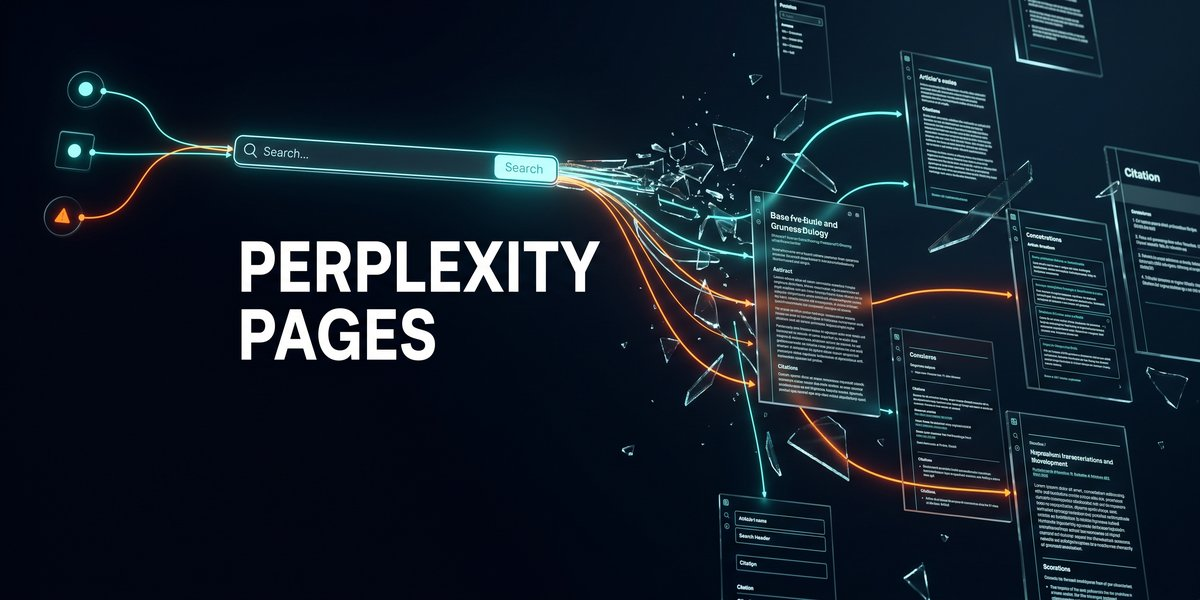
Perplexity shipped Pages.
The research report business just got uncomfortable.
Here’s how it works.
You pick a topic inside the Library tab. Set your audience. Beginner, advanced, or general. Hit generate. The thing spits out a multi-section document with inline citations, headers, even embedded media.
I ran a real brief through it.
Competitive analysis for a B2B SaaS project management tool. The output? Clean enough to send to a client without a panic attack. Not great. Not terrible. Think: something a junior analyst drafted and nobody reviewed.
That last part. That’s the whole story.
What Pages Actually Delivers
Look, the mechanics are simple.
Library tab, generate, done. Free users get it. Pro users get additional features. Perplexity decides which model handles which section. Then Deep Research runs unlimited on top of that.
Once generated, you can edit.
Add sections. Strip others. Drop in your own images or let Perplexity crawl for relevant media. The output lives at a permanent public URL. Regular Perplexity shared links? Gone in about a week. Pages persist. Google indexes them. Perplexity built that behavior in on purpose.
Here’s the citation problem nobody’s talking about. Inline sources look great. But Pages can only cite what Perplexity can crawl. Paywalled journals, proprietary databases, industry reports behind a paywall. Invisible to the tool. So the output quality is a function of how much good stuff is sitting in public index space. In some industries, that’s most of what matters.
In others, it’s a fraction.
Side note: Perplexity’s own documentation on source attribution is vague.
Asked three times, got the same marketing copy back.
The Revenue Problem Nobody’s Counting Yet
Let me be straight with you.
If your agency’s bread and butter is taking public information and making it look organized. Market trend decks, competitor summaries, topic explainers assembled from Google results.
You’re now priced against a robot that does that for free.
Pages doesn’t replace a strong analyst.
It replaces a mediocre one. And there’s a meaningful difference.
Talked to a freelancer last week. His workflow: Perplexity for the sweep, manual organization, some original framing, client call to add color. The call and the framing? Still worth paying for. The compiled middle section that took three hours? Pages ate that in a fraction of the time.
The math isn’t complicated.
For a low monthly fee, a client can skip the freelancer entirely and get a decent first draft whenever they want.
Except. Except clients don’t actually want a first draft. They want clarity. Direction. Someone to tell them what the data means and what to do next. That part. The judgment layer — Pages doesn’t touch.
Putting This to Work Before It Puts You Out of Work
No panic needed.
Here’s the actual playbook.
Flip the compilation time. If you’re spending half your research hours pulling sources and organizing them. That’s Pages’ job now.
Reposition, yesterday. “I compile research” is a race to zero. “I turn research into decisions” isn’t. Pages handles the what. You’re selling the so-what. That line in the sand is where value lives now.
Know the ceiling. Healthcare, legal, niche B2B SaaS with proprietary data. Pages won’t produce what your clients actually need. If that’s your market, the tool is less threatening than it looks.
Build Pages into deliverables. Permanent URLs, clean formatting, citations included. If you’re already doing research work, generate Pages for the sections clients need to reference. Better than a shared doc that nobody can find.
What This Means Long-Term
Search changed when Perplexity launched. Discovery changed when Pages launched. The web’s getting a second layer now — AI-generated but citation-anchored content, designed to be indexed and linked.
The interesting shift: if decent research reports are free and instant for everyone, the scarce resource flips.
Information’s abundant. Judgment, experience, the ability to act.
Those become more valuable, not less.
Pages doesn’t make you irrelevant. It makes you more irrelevant if you were only selling information. Interpretation and action? That’s where every small agency and solo operator should be playing. Pages is a tool. A useful one. Use it before your competition figures that out.
—
Perplexity Pages launched recently. Access via Library tab on desktop. Pro subscribers get additional features and unlimited Deep Research. Free tier includes Pages generation. Pages are publicly accessible and indexed.