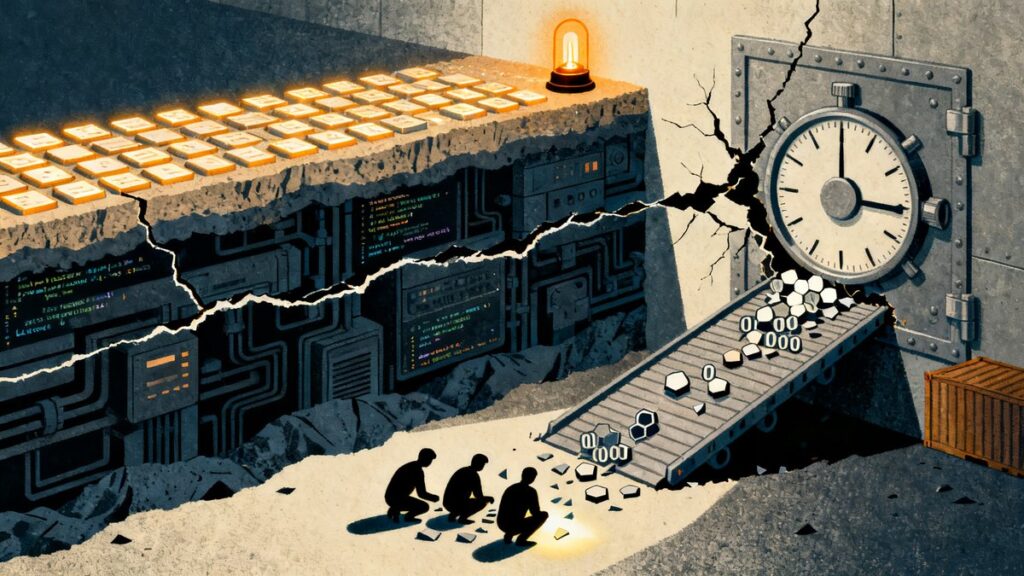

LLMs reward expertise. I keep putting that sentence at the top of proposals because, after running a one-person AI automation agency through this entire AI boom, it is the one claim I would bet money on.
The model hands everybody equally fluent output. Whether that output turns out to be worth anything depends almost entirely on whether the person holding it can tell good work from confident garbage.
I assumed the opposite for a while, I should admit. My wrong guess was that prompt craft was the differentiator. That whoever knew the tricks would win. Client work corrected me. The tricks are cheap. Judgment is not.
And the tools do not flatten skill differences, whatever the demos promised.
It compounds them.
How LLMs Reward Expertise (and Expose Beginners)
Start with what the machine actually does. It generates options, fast, always in the same confident register whether it happens to be right or wrong. Not the twelve AI tabs you keep open in case one of them turns out to be magic. Not the prompt templates.
Those change almost nothing.
What changes the payout is everything the person brings that the model cannot fake.
The real constraints of the business.
Which edge cases bite. What “done” actually looks like. And which of the five plausible answers fits this specific situation rather than the average one.
An expert reads those five options, kills four of them in seconds, and shapes the fifth into something shippable.
A novice reads the same five and has no grounds to reject a single one, as every answer arrives dressed identically. So the first draft ships. The first draft of anything nontrivial is usually wrong in ways only an experienced person can see.
A nail gun fires the same nail at the same speed for the apprentice and for the framer who has been framing since before the apprentice was born.
The gun was never the difference. Knowing where not to fire is.
The model is the gun.
Why LLMs Pay Two People Differently
Last Thursday, on a review call that ran long since nobody wanted to say the word rebuild out loud, I watched the pattern in miniature.
A workflow billed as finished. An operator beside me named the flaw inside a minute, before the screen share even loaded. The person who built it had not known what to look for. That was the whole problem, and no tool fixes it.
My agency sees this on the review side constantly, and the split is blunt. Drafts coming back from experienced operators need edits. Drafts coming back from people who skipped the fundamentals need autopsies.
Here is the part that flips the usual fear. The expert’s advantage stopped being recall.
On raw facts the machine wins, and it wins against everyone, veteran included.
The advantage is taste. That flat feeling that something is off before you can say why, then digging until you find the flaw. Knowing which question to ask next. Knowing which constraint the model quietly ignored. Recognizing a confident paragraph as a hallucination in a good suit.
That only exists given that the expert once did the work the slow way. Wrote the bad first versions. Debugged the broken pipeline. Got the requirements wrong and paid for it. Every one of those mistakes built the internal model that now lets them supervise a machine working at machine speed.
The people who feared obsolescence are the ones holding the advantage. The people promised a shortcut past the climb got a tool that quietly assumes the climb already happened.
How to Use LLMs Without Losing Judgment
If you never write the rough draft yourself, you never learn what a rough draft costs. If you never assemble the logic yourself, you never build the mental model that lets you check anyone else’s, human or machine. Evaluation skill is downstream of production skill.
And LLMs let you skip straight to judging with nothing to judge with.
What that produces is a person who can generate impressive-looking work all day and cannot defend one decision inside it.
Then something breaks. And in automation, things break constantly. And nobody home knows why it ever worked.
So: use the model after you have formed your own position, not instead of forming one. Write your guess first. Then prompt. The gap between the two is your education, and it is the only training signal you will get.
A few habits that keep the tool a sparring partner rather than a crutch:
– Write your own answer before you prompt, then compare. Where you were wrong is the lesson.
– Ask it to argue against your plan before it executes anything. Its objections are cheap; your blind spots are expensive.
– Make it show alternatives instead of one confident answer, and reject some of them out loud, on purpose.
– Anything that touches money, customers, or production systems, you verify yourself. Every time.
LLM Adoption in a Small Shop
Small businesses feel this hardest, as nearly all AI adoption advice is written for enterprises with training budgets. And mid-market guidance barely exists.
So here is the mid-market version, from someone who bills for this.
Do not hand the newest hire the shiniest tool and expect senior output. You will get volume, you will get it fast. And someone experienced still has to review every line of it.
Budget for that review before you start, or do not start.
Put the tools in the hands of your most experienced people first, even when they resist.
Their judgment is the multiplier. And an hour of their expertise amplified is worth more than any stack of unreviewed junior hours.
If you are the solo expert doing everything yourself, this is quietly good news. Your accumulated judgment just became the scarce input in a world where generation is free. The model produces the options.
You are the one who knows which option survives contact with your actual customers.
If you want automation built by someone who knows the domain and treats model output as a starting point rather than a verdict, that is the work Mediascout does.
Bring the process you know cold.
We will build the machine around it.
FAQ: Do LLMs Replace Expertise?
Do LLMs replace expertise?
No. They reward it. LLMs win on recall and lose on judgment, and judgment is what turns fluent drafts into deliverables.
I have no study to cite here — my evidence is the client work I have personally reviewed. And I would rather own that limit than dress the claim up with a link it does not have.
Should juniors use AI tools first?
Not first in the sequence. Juniors get the most out of AI tools after they have formed their own answer, since the gap between their guess and the model’s output is the actual training signal. Skip that step and they learn to accept output instead of evaluating it.
Can beginners close the gap?
Yes, conditionally. The tool that was supposed to democratize expertise widens the distance first — between people who can judge and people who can only accept.
The closing only happens if beginners use LLMs to learn faster rather than to skip learning entirely.
The closing is optional.
What should a small team do first with LLMs?
Put the tools with your most experienced person, budget real review hours, and treat every output as a draft.
That is the entire adoption plan for a shop without a training department.
Sources
None, honestly. This piece is opinion built from Mediascout client work — no external study or statistic is cited.
And I would rather say that plainly than attach a link the argument never had.