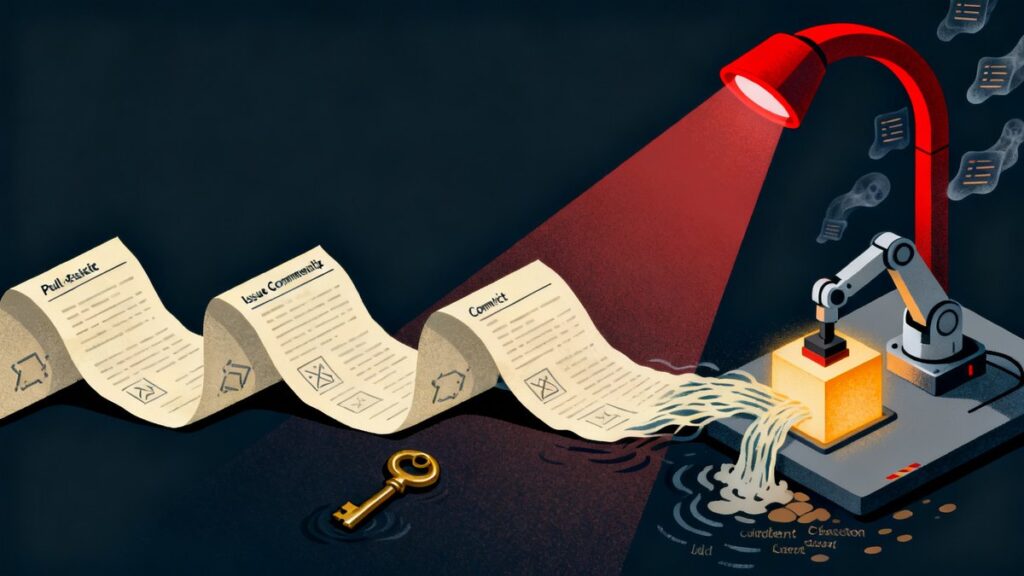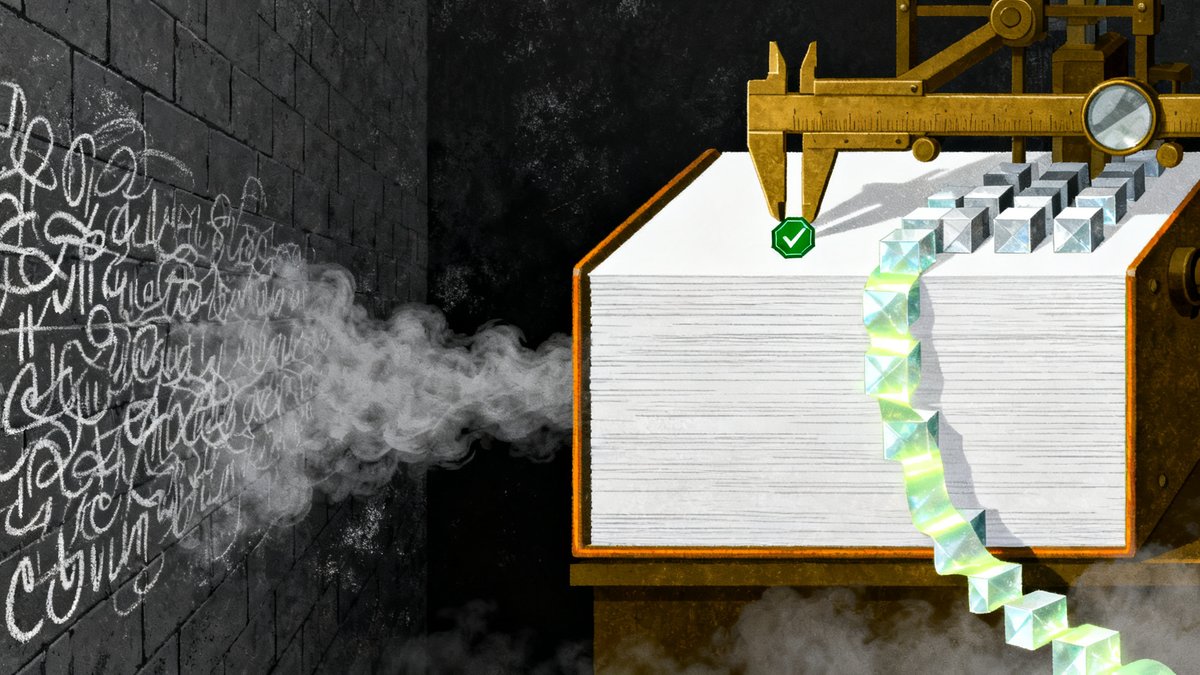
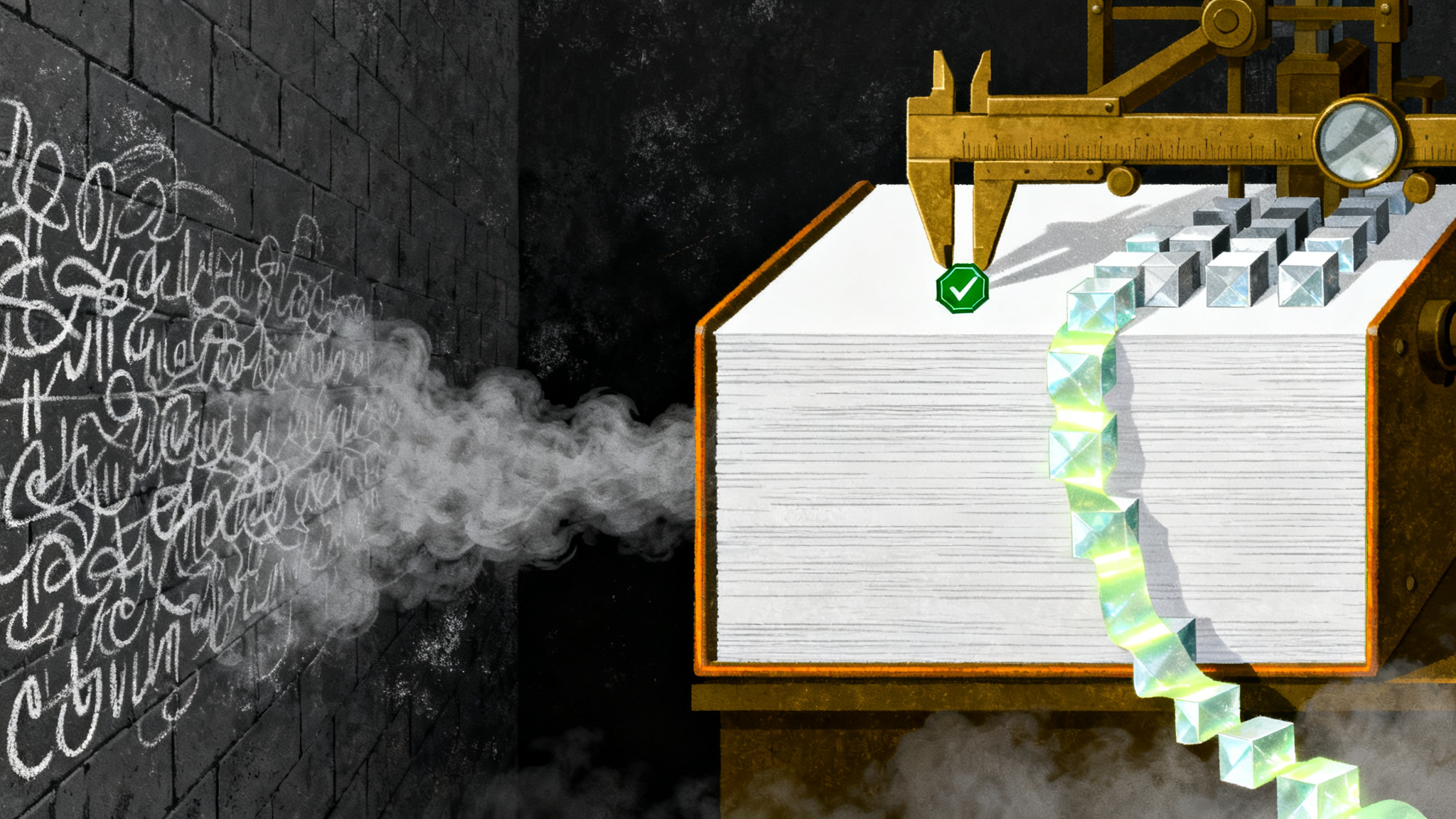
AI-generated mathematical proofs just got pointed at long-standing conjectures, and the real story isn’t the answers.
It’s the checking. On August 1, 2026, OpenAI announced ten results it said either resolved or made substantial progress on open problems, including a disproof of the Erdős unit-distance conjecture and a disproof of Connes’s rigidity conjecture. And it said the model formalized each argument in a Lean certificate. (OpenAI)
Generation was never the hard part. Verification is the product. That’s the lesson for anyone who ships software or runs decisions on model output. And it doesn’t require caring about von Neumann algebras.
What happened
Ten results, one announcement, August 1, 2026.
OpenAI said the set included disproofs of the Erdős unit-distance conjecture and Connes’s rigidity conjecture.
And that each argument came with a Lean certificate. (OpenAI) Secondary coverage widened the list: a proof of the cycle double cover conjecture, a counterexample to the Jacobian conjecture in three variables, a Navier–Stokes blow-up result involving an external force. And a Lean formalization of Fermat’s Last Theorem described as about 13 million lines in 11 days. Two different tiers of claim landed in the same news cycle. And that distinction runs through everything below.
How AI-Generated Mathematical Proofs Are Tested Against Old Conjectures
A conjecture is a mathematical claim that hasn’t been proved or disproved.
The long-standing ones are nasty targets. Because they’ve survived sustained attention, partial results, and repeated attempts to find the missing idea.
One detail in the OpenAI account beats the result itself. The company said its disproof of the Erdős unit-distance conjecture was discovered while it was evaluating an unreleased model. Not a targeted hunt. The thing surfaced on the way to a separate test. The same August release described a disproof of Connes’s rigidity conjecture, which concerns whether certain groups are uniquely determined by their von Neumann algebras, a phrase that has ended more dinner-party conversations than it ever started. (OpenAI)
A separate review reached past the primary announcement. It also listed a proof of the cycle double cover conjecture, which dates to the 1970s, plus a counterexample to the Jacobian conjecture in three variables, a Navier–Stokes blow-up result involving an external force. And a Lean formalization of Fermat’s Last Theorem described as about 13 million lines in 11 days. Thirteen million lines, eleven days.
That pair of numbers wasn’t chosen for a press release.
Not every item in that secondary list is equally settled, and that’s fine. The pattern worth copying is the aim: systems pointed at claims with a clear standard of success. A proof, a counterexample, or a formal artifact that can be checked. That’s a better test than a benchmark score. A benchmark tells you how a system performed on a prepared task. A conjecture forces the system to produce something a skeptic can attack.
Why Lean Makes AI-Generated Proofs Checkable
A natural-language proof can look complete and still hide a missing assumption or an invalid step.
Prose forgives. Lean doesn’t. Forbes described Lean as a language that allows a computer to check a proof line by line. (Forbes) The checker either accepts a step or rejects it. And it doesn’t care how confident the paragraph sounded.
That doesn’t make every headline true.
What it does is hand reviewers a stronger object to inspect, which turns out to matter a lot.
OpenAI said each of its ten arguments was formalized in a Lean certificate. (OpenAI) A Forbes report added the scale: OpenAI posted more than 700 AI-written mathematical manuscripts on October 6, 2026, with about 300 including proofs in Lean. (OpenAI; Forbes)
A certificate still leaves work for the reader.
It settles whether the formal system accepts the steps encoded in the proof. It doesn’t automatically make the result easy to read, easy to reproduce, or meaningful outside the formal setup. The check covers the mechanics; the meaning stays your problem. Lean’s own community treats lemma-naming disputes the way other people treat parking disputes. So none of this friction is new — it just became load-bearing.
What the Formalization Gap Means for AI Proof Claims
More than 700 manuscripts posted. About 300 with Lean proofs inside, per Forbes. (Forbes) That gap is the story. “AI generated a mathematical paper” and “a computer checked the proof” are other claims. And blurring them is how hype gets manufactured.
The same report described one manuscript claiming a zero-free region for the Riemann zeta function where the real part exceeds 7/8. It was presented as a partial result related to the Riemann hypothesis, not as a complete proof of the hypothesis. (Forbes) 7/8 — a fraction nobody would invent for a demo. That wording is the standard readers should hold everyone to: partial stays partial, a reported claim stays a reported claim. And a formalized proof never gets quietly upgraded into an explanation.
The OpenConjecture work moves the test past famous problems, and it’s the direction I find more interesting. The dataset collects conjectures from mathematics papers published on arXiv since February 2026, sampling recent preprints rather than only historical problems. In three passes over 200 conjectures, the evaluation produced 70 counterexamples and 55 proofs. (OpenConjecture paper) A system that only attacks famous conjectures is easy to turn into a publicity event. A system tested against recent conjectures faces a wider, less curated set of problems. The output still requires review, but the test says more about research usefulness.
October kept the pressure on, per the Formalized Research Observatory. The observatory said OpenAI announced a Lean-verified refutation of the Exponential Time Hypothesis and results on the Kakeya and Stein restriction conjectures. It too reported that Axiom released the first complete Lean formalization of the Classification of Finite Simple Groups in October 2026. (Formalized Research Observatory) Substantial claims, formal objects attached. The attachment doesn’t settle them — it gives scrutiny somewhere to start.
Then there’s the communication problem.
By November 21, 2026, a Reddit discussion was reporting that Anthropic had made Lean code public without providing a natural-language proof. (Reddit) A Reddit thread isn’t primary documentation. And I wouldn’t treat it as one.
But it catches the practical gap: code that passes a checker and an explanation a human can evaluate aren’t the same deliverable.
So here’s the version of all this that fits a Tuesday.
When an AI tool hands you research, code, analysis, or a business recommendation, split it into three layers. The claim the system says it found, the artifact that supports it (a file, a test, a certificate, a calculation, a source). And whoever or whatever checked that artifact independently. It’s the difference between a mechanic who says the brakes feel fine and one who hands you the gauge reading. Keep the generated output, preserve the intermediate material. And run an independent check instead of asking the same system to approve its own work.
Don’t publish the answer before you can point to the check.
For a proof, that’s a formal artifact plus independent review.
For software, tests and a reproducible change. For business research, sources and a review path. The next claim won’t be the last one. Build the workflow now, before the next impressive demo lands.
FAQ: AI-Generated Mathematical Proofs
What are AI-generated mathematical proofs?
Arguments produced by AI systems aimed at open mathematical problems. In this case, OpenAI announced ten results on August 1, 2026, including disproofs of the Erdős unit-distance conjecture and Connes’s rigidity conjecture. And said each argument was formalized in a Lean certificate. (OpenAI)
What is a Lean certificate?
A formal artifact that encodes a proof in Lean, which Forbes described as a language that allows a computer to check a proof line by line. (Forbes) A certificate settles whether the formal system accepts the encoded steps; it doesn’t automatically make the result easy to read, easy to reproduce, or meaningful outside the formal setup.
Did AI prove the Riemann hypothesis?
No. Among the more than 700 manuscripts posted on October 6, 2026, one claimed a zero-free region for the Riemann zeta function where the real part exceeds 7/8. And it was presented as a partial result related to the Riemann hypothesis, not a complete proof. (Forbes)
What is the formalization gap?
The distance between what a model generated and what a machine actually checked. Forbes counted more than 700 AI-written mathematical manuscripts posted on October 6, 2026, with about 300 including proofs in Lean. (Forbes)
What should you check before trusting an AI proof claim?
What the system says it found, what artifact supports it, and who checked that artifact independently. Ask what it produced, what verifies it, and what remains unverified — then decide.