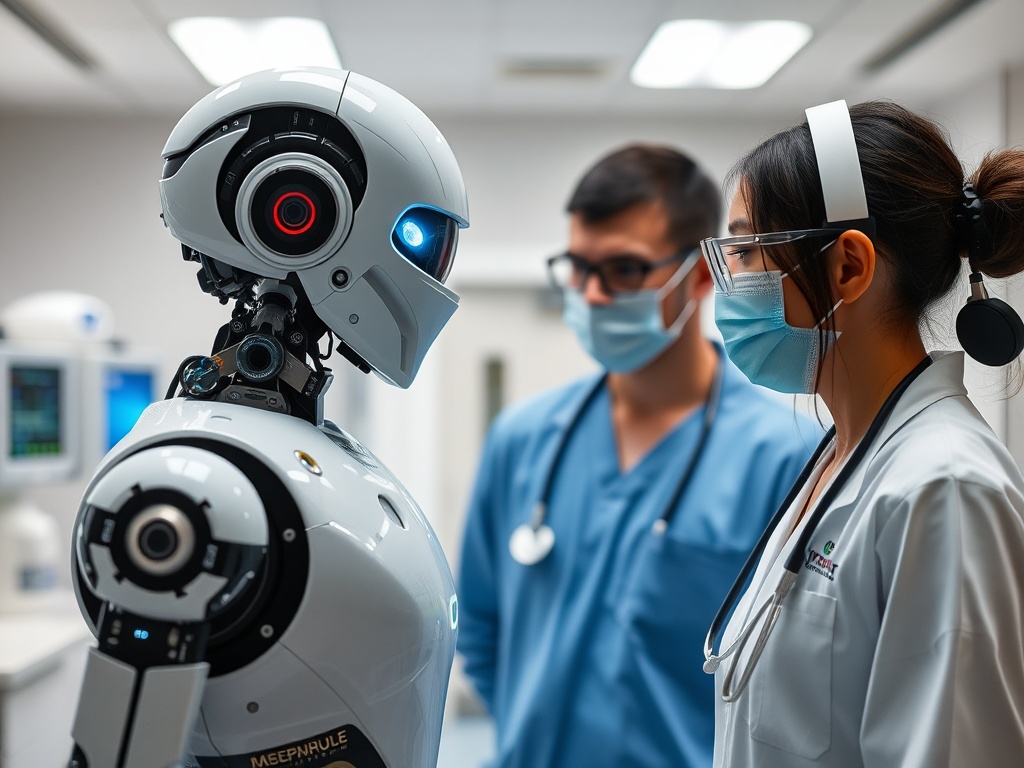
Discover the cutting-edge world of multimodal AI sensory integration where robots and healthcare systems harness vision, audio, and scent to perceive and interact with precision and intelligence. These advancements lead to striking improvements in autonomous machines and patient care.
The Rise of Multimodal Robotics
In the rapidly evolving field of artificial intelligence and robotics, the integration of multimodal AI systems marks a significant leap toward mirroring human-like perception in machines. This technological advancement, particularly in robotics, enhances machine perception and decision-making through sophisticated sensor fusion techniques. By embedding machines with the ability to process and interpret data from multiple sensory inputs simultaneously, robots are now capable of understanding and interacting with their environments in a much more comprehensive and nuanced manner. This chapter delves into the forefront of multimodal robotics, highlighting key developments that illustrate the profound impact of this technology.
At the core of these advancements lies the innovative integration of capacitive and triboelectric sensors in soft robotics. This development not only signifies a judicious employment of technology but also a strategic advancement that leverages the inherent flexibility and sensitivity of these materials. These sensors enable robots to perform distributed multimodal sensing, which facilitates a cross-modal recognition of objects. The capacitive sensors, with their ability to detect changes in electrical fields, combined with the triboelectric sensors, which generate a charge through contact and separation with different materials, provide robots with a heightened sense of touch. This mimics the human ability to perceive textures, stiffness, and other physical properties, thus enhancing robots’ object recognition capabilities. Furthermore, these technologies empower adaptive grasping methods, enabling robots to adjust their grip on objects based on the sensed attributes, significantly improving the efficiency and safety of automated handling processes.
Another landmark development in the field is the creation of the OmniVLA (Omnidirectional Vision, Localization, and Audition) model, a cutting-edge approach to robotic perception. This model epitomizes the essence of multimodal AI by unifying multiple sensing modalities, including vision, audio, and spatial localization. The OmniVLA model equips robots with an enhanced capability for precise environmental interpretation, navigation, and manipulation. By processing synchronized data from visual, auditory, and location sensors, robots can perform complex tasks with greater accuracy and adaptability. This integration not only enriches the robots’ perceptual input but also lays a robust foundation for advanced decision-making protocols.
One specific system that stands out in the practical application of multimodal AI in robotics is the MARS system (Multimodal Autonomous Robotic System) for smart home environments. The MARS system exemplifies how diverse sensory data can be fused to create a comprehensive understanding of domestic spaces. Incorporating vision, sound, and olfactory sensors, alongside capacitive and triboelectric sensors, the MARS system can perform a multitude of tasks, from environmental monitoring to assisting residents in their daily activities. This system underscores the potential of multimodal AI to create robots that can seamlessly integrate into human environments, assisting with chores, ensuring security, and even detecting health hazards.
Through the integration of capacitive and triboelectric sensors in soft robotics, along with the deployment of comprehensive models like the OmniVLA and systems like MARS, multimodal AI systems in robotics are setting unprecedented standards in machine perception and decision-making. These developments not only advance the field of robotics but also serve as a testament to the potential of AI to mimic human sensory integration, paving the way for innovations that could revolutionize healthcare, environmental monitoring, and beyond. The rise of multimodal robotics heralds a future where machines can perceive the world with a richness and complexity that rival human senses, opening up possibilities for more intuitive, efficient, and sensitive robotic applications in various sectors.
Breakthroughs in Machine Olfaction
In the evolving landscape of artificial intelligence (AI) and sensor technology, the field of machine olfaction, or electronic nose technology, stands as a groundbreaking advancement, bringing the sense of smell into the realm of robotics and healthcare with unprecedented precision and utility. The integration of machine olfaction into multimodal AI sensory systems is paving the way for revolutionary applications in environmental monitoring and medical diagnostics, showcasing the power of combining olfactory data with vision and auditory information for a comprehensive understanding of various environments.
At the forefront of these innovations are neuromorphic chips and photonic noses, which are designed to mimic the human olfactory system, enabling machines to detect and analyze complex odors and chemical signatures with remarkable sensitivity and speed. Neuromorphic chips, in particular, leverage the principles of neurobiology to process olfactory signals in a manner that closely resembles the human brain’s handling of smell information, leading to more effective identification of subtle scent patterns. Photonic noses, on the other hand, use light-based sensors to identify molecules, offering a non-invasive and potentially more versatile approach to olfaction technology.
The integration of AI and machine learning techniques with these olfactory sensors has exponentially increased their capabilities, facilitating the quick analysis of vast amounts of data to identify and classify odors accurately. This advancement is especially beneficial in environmental monitoring, where it is crucial to detect hazardous substances and pollutants rapidly. Machine olfaction can monitor air quality in real-time, identifying potentially harmful compounds even at low concentrations, thus providing critical data for protecting public health and the environment.
In the medical field, olfactory AI systems are being explored as diagnostic tools, capable of identifying disease biomarkers from breath or bodily fluids. This non-invasive diagnostic method offers a promising alternative for early disease detection and monitoring, with potential applications in detecting cancers, neurological diseases, and infectious ailments. The ability of these systems to integrate olfactory data with visual and auditory information from other medical diagnostics tools, like imaging and acoustic sensors, can enhance the accuracy of diagnoses and the efficacy of treatments, bridging the gap between multimodal AI applications in robotics and healthcare.
However, the deployment of machine olfaction technologies is not without challenges. Sensor design and the development of algorithms capable of interpreting complex olfactory data require intricate understanding and innovation. The variety and complexity of smells, coupled with the influence of environmental factors such as humidity and temperature, pose significant obstacles to the standardization and scalability of olfactory sensors. Moreover, ensuring the sensitivity and selectivity of these sensors while maintaining robustness and long-term stability remains a critical area of research.
Despite these challenges, the potential of machine olfaction in enhancing multimodal AI sensory systems is vast. As research advances and technological hurdles are overcome, the incorporation of olfactory data into AI-driven applications promises to unlock new dimensions of perception for robots and AI systems. This could lead to smarter, more responsive technologies that better understand and interact with their environments, continuing the seamless progression from multimodal perception in robotics to the vast possibilities within healthcare innovation.
The following chapter will delve deeper into the implications of multimodal perception in healthcare, examining how the convergence of medical imaging, clinical records, physiological data, and now, olfactory information, can lead to breakthroughs in patient care, diagnosis, and treatment methodologies. The integration of these diverse data types through AI promises to revolutionize medical practices, offering a more nuanced and comprehensive approach to health and medicine.
Enhancing Human Health with Multimodal Perception
Building on the recent breakthroughs in machine olfaction technology detailed in the preceding chapter, the realm of healthcare stands to be significantly transformed through the power of multimodal AI sensory integration. By weaving together insights from medical imaging, clinical records, and physiological data, these systems promise a leap forward in accurate diagnostics and personalized treatment strategies, notably in fields such as oncology, emotional and physiological signal recognition, and clinical outcome prediction.
Multimodal perception in healthcare leverages the convergence of various data types to offer a comprehensive understanding of patient health. In oncology, this integration facilitates the early detection of cancers through a detailed analysis combining imaging modalities—such as MRI, CT scans, and PET—with genetic information and biomarkers detected through olfactory sensors. This enriched dataset enables algorithms to identify patterns and anomalies with unprecedented precision, promising earlier interventions and tailored therapy regimens that significantly enhance patient outcomes.
The advancements in AI and machine learning, particularly in machine olfaction as discussed previously, play a pivotal role in refining emotional and physiological signal recognition. This capacity is particularly revolutionary in psychiatric and neurological care, where accurate assessments of a patient’s emotional state and physiological responses can guide treatment planning. For instance, integrating data from facial recognition software, speech analysis, and olfactory signals can help detect subtle changes in a patient’s condition, enabling timely adjustments to their treatment plan. Such multimodal systems are proving invaluable in monitoring mental health conditions, offering a nuanced understanding that surpasses traditional observation methods.
Predicting clinical outcomes is another area where multimodal AI shows immense promise. By synthesizing information from medical imaging, electronic health records, lab results, and even olfactory data—thanks to the innovations in machine olfaction technology—AI systems can predict patient trajectories with remarkable accuracy. This capability not just facilitates personalized medicine but also improves hospital resource allocation, identifies patients at risk of adverse events, and supports decision-making processes in treatment and care management.
The integration of these diverse data streams, however, does not come without its challenges, as will be discussed in the next chapter. Issues such as data compatibility, sensor disparity, and handling the complexity of real-world environments pose significant hurdles. Yet, the potential benefits in healthcare, particularly in enhancing diagnostic precision and tailoring patient care, push the boundaries of current technology, encouraging continued research and development in multimodal AI systems.
Guided by the advancements in machine olfaction and powered by the broader spectrum of AI and multimodal perception, the application of these technologies in healthcare heralds a new era of medical diagnostics and treatment. As these systems grow more sophisticated, they offer the promise of not just understanding diseases with greater depth but also of recognizing the subtle interplays of emotional and physiological signals that play a crucial role in patient care. This evolving landscape underscores the immense potential of multimodal AI to enhance human health, setting the stage for a future where healthcare is more accurate, empathetic, and personalized than ever before.
Overcoming the Challenges of Sensory Integration
Unlocking the potential of multimodal AI sensory integration systems poses significant challenges due to the intrinsic complexity of data compatibility, sensor disparity, and the dynamic nature of real-world environments. These systems, pivotal in advancing applications in robotics, machine olfaction, and healthcare, require seamless integration of vision, audio, and olfactory data to achieve a comprehensive understanding of their surroundings. As we move forward from enhancing human health with multimodal perception, addressing these technical and practical challenges becomes paramount to unlocking the full potential of AI in sensing and perception.
A primary challenge lies in data compatibility. Multimodal AI systems ingest a vast array of disparate data types, each with unique formats, scales, and quality. For instance, integrating high-resolution visual data with volatile chemical signatures captured by olfactory sensors demands sophisticated data preprocessing techniques. Techniques such as data normalization and feature engineering are essential, yet they often require domain-specific knowledge, making generic solutions elusive.
Moreover, sensor disparity adds another layer of complexity. Sensors vary widely in sensitivity, range, and type of data collected. In robotics, for example, capacitive sensors might detect an object’s presence, while triboelectric sensors provide texture information. The challenge arises in fusing these diverse data streams into a coherent model that can accurately interpret the environment. Research is ongoing into algorithms that can efficiently handle such sensor fusion, focusing on deep learning models capable of learning complex representations from heterogeneous data sources.
The complexity of real-world environments further exacerbates these challenges. Unlike controlled settings, the real world is unpredictable and highly variable. This unpredictability requires multimodal AI systems to be robust and adaptable. Adaptive algorithms, capable of learning from novel experiences and refining their models over time, show promise. Yet, these algorithms must balance adaptability with the computational efficiency to function effectively in resource-constrained environments, such as mobile robots or wearable healthcare devices.
Ongoing research aims to address these challenges through innovative solutions. One promising area is the development of universal feature extractors, which can process and integrate data from multiple modalities seamlessly. These tools aim to standardize data preprocessing, making it easier to develop and deploy multimodal AI systems across different domains. Additionally, the advent of cross-modal learning techniques enables AI systems to infer missing information from one modality using the data available from another, thereby enhancing the robustness and resilience of these systems.
Despite these challenges, the potential benefits of successfully integrating multimodal sensory data in AI systems are immense. In healthcare, for example, combining olfactory data with visual and audio inputs could lead to early detection of diseases through non-invasive methods, transforming patient care and outcomes. In robotics, enhanced sensory integration means robots can perform more complex tasks with greater efficiency and autonomy, from precision agriculture to advanced manufacturing.
As we contemplate the future of multimodal AI applications, the focus must remain on overcoming the hurdles of sensory integration. The development of more sophisticated algorithms, coupled with advancements in sensor technology, will likely pave the way for breakthroughs across sectors. The promise of multimodal AI not only lies in enriching human-machine interaction but also in its capability to unravel complex, real-world problems with unprecedented precision and insight.
The Future of Multimodal AI Applications
As we forge ahead into an era where the fusion of machine senses mimics the complexity of human perception, the advancements in multimodal AI sensory integration are set to revolutionize industries by transcending traditional limitations and enabling a deeper understanding of the world around us. Building upon the foundation of overcoming challenges related to sensor disparity and data compatibility, as discussed in the preceding chapter, this chapter delves into the future possibilities that these innovations might unlock, particularly in autonomous vehicles, environmental sensing, and personalized medicine.
In the realm of autonomous vehicles, the integration of multimodal AI systems is a game-changer. The synthesis of vision, audio, and machine olfaction technology promises to enhance the safety and efficiency of autonomous navigation. Visual and auditory sensors, although highly effective in obstacle detection and traffic analysis, occasionally fall short in scenarios such as unmarked road edges or the auditory chaos of urban settings. The incorporation of olfactory sensors can add a new dimension, allowing vehicles to detect and respond to chemical markers or hazardous conditions long before they become visible or audible. Imagine a future where autonomous cars can “smell” a gas leak or identify dangerous weather conditions through air quality changes, significantly reducing the risk of accidents and improving roadway safety.
When it comes to environmental sensing, the potential applications of multimodal AI are vast. The integration of sensory data from diverse sources could lead to unprecedented levels of monitoring and management of natural resources and hazards. For instance, combining satellite imagery, ground sensor data, and olfactory AI could create dynamic, responsive systems for detecting forest fires, oil spills, or greenhouse gas emissions. This integrated approach could enable earlier detection, more accurate monitoring, and more effective response strategies, helping to protect ecosystems and human communities alike. Furthermore, multimodal perception in robotics equipped with these sensors could be deployed in hard-to-reach or hazardous environments, performing tasks too dangerous or difficult for humans.
In the field of personalized medicine, the implications of multimodal AI sensory integration are profound. By combining data from genomic sequencing, medical imaging, and sensors capturing real-time physiological data, healthcare providers can gain a holistic view of a patient’s health status. This could lead to highly personalized treatment plans, early intervention in disease progression, and better patient outcomes. Moreover, the application of olfactory AI in diagnostics represents a frontier in non-invasive testing, potentially enabling the detection of diseases through analysis of breath or skin emissions. The fusion of these sensing capabilities, underpinned by machine learning models, will empower clinicians with insights that were previously unimaginable, tailoring medical interventions to the individual’s unique health profile.
Moving forward, the role of AI in enriching human-machine interaction cannot be overstated. As we refine the capabilities of AI systems to process and integrate sensory information in ways that mimic human perception, the boundary between human and machine understanding will blur. This evolution promises not only enhanced performance across a range of applications but also a deeper, more intuitive connection between humans and the technologies that serve them. Advancements in multimodal AI sensory integration are not just about machines learning to see, hear, or smell the world around them—it’s about crafting a future where technology perceives and interacts with the environment in service of humanity, fostering innovation and solutions that are as dynamic and complex as the world they aim to improve.
Conclusions
Multimodal AI sensory integration represents a significant leap forward in robotics and healthcare technology, endowing machines with near-human perception and capabilities. This confluence of senses is shaping the future of how machines understand and navigate our world.