A February 2026 arXiv paper titled “Towards a Science of AI Agent Reliability” proposes twelve metrics for judging whether an autonomous agent deserves your trust, split across consistency, robustness, predictability, and safety (arXiv).
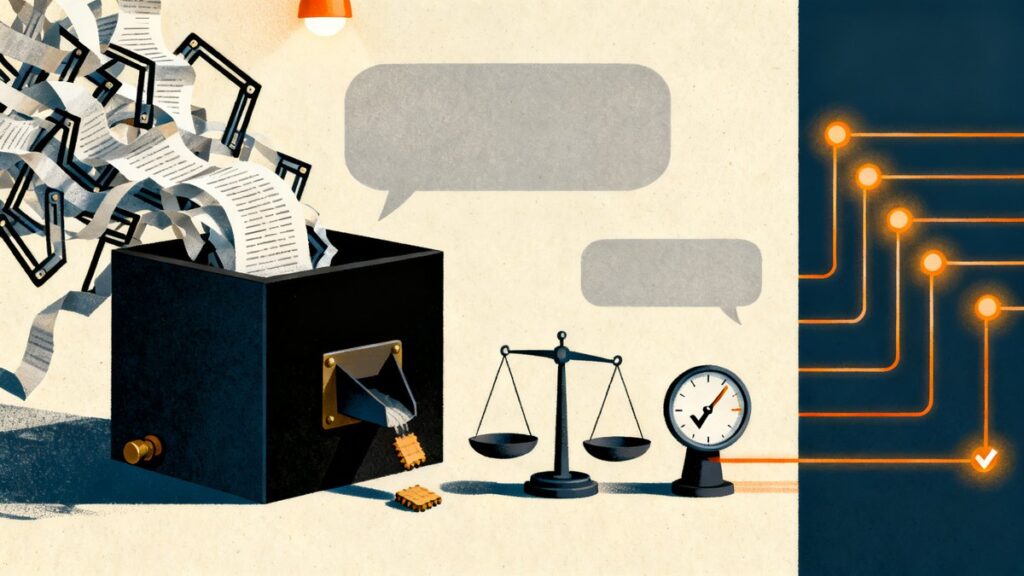
But the number that should actually change how you build comes from a different study: 74% of the policy requirements in its evaluation could be enforced by symbolic guardrails, “often using simple, low-cost mechanisms” (arXiv). Read that again. Most of what keeps an autonomous agent from doing damage is not a smarter model, better prompting, or a bigger context window. It’s deterministic code you could write this afternoon.
AI agent reliability is an engineering discipline before it’s a model capability. And the research is now saying so in plain terms.
The Average Lies: Instability Hides in the Tail
The most useful caution in this whole body of research comes from a 2026 study that ran autonomous generative AI agents through the MIT Beer Game, the classic multi-echelon supply-chain simulation (arXiv).
The agents looked competent on paper.
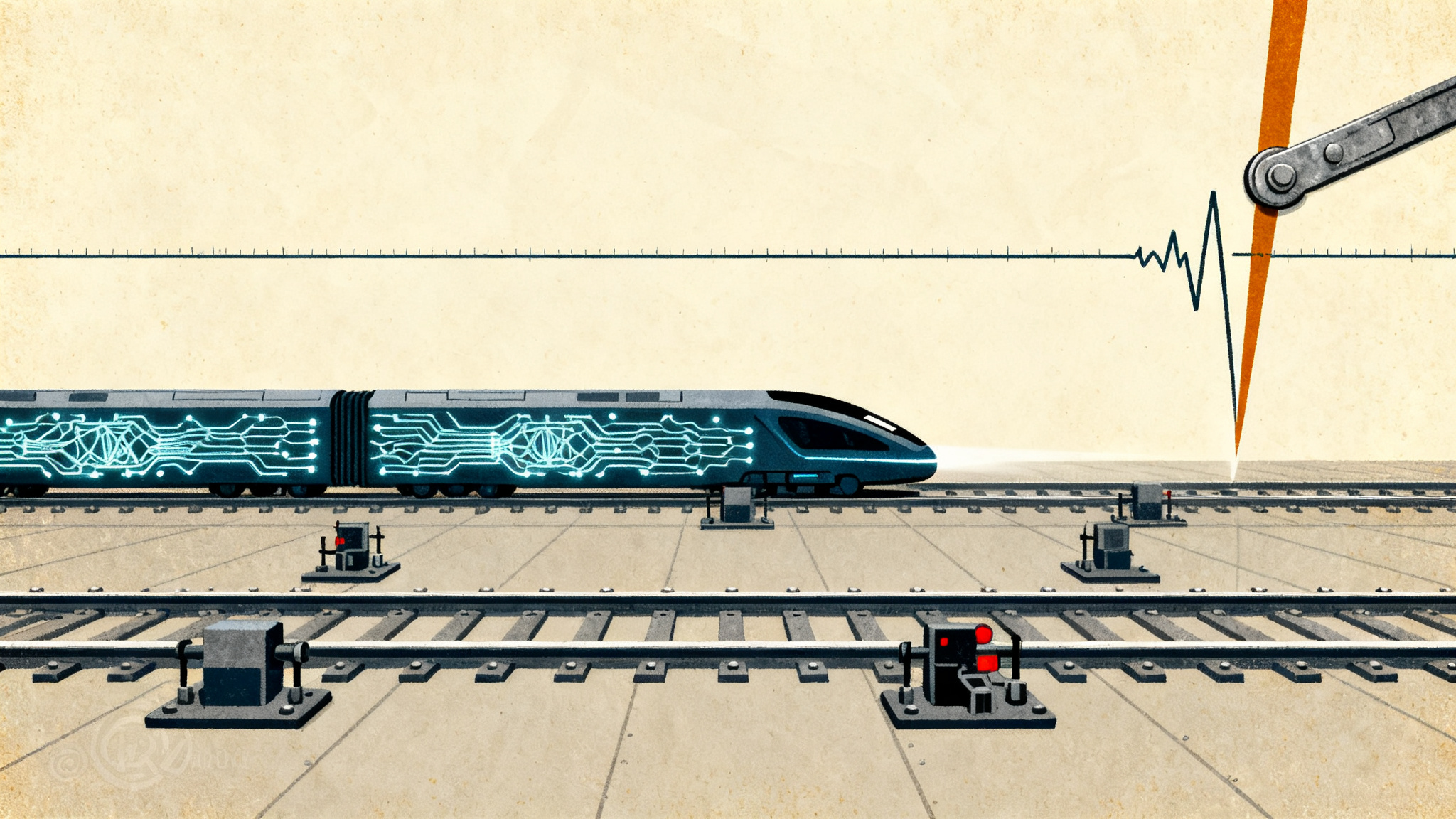
The study reports that “despite strong average performance, autonomous agents can exhibit substantial run-to-run instability, generating volatile procurement decisions and large tail costs.”
The authors gave the phenomenon a name: agent bullwhip, “the amplification of decision instability in autonomous multi-agent systems.” Same agent, same task, same inputs, wildly other behavior on the next run. Your evaluation dashboard averages those runs together and shows you a healthy score while the worst run quietly places the catastrophic order.
This is why benchmark accuracy is the wrong scoreboard for agents.
A benchmark measures the middle of the distribution. Your business lives in the tail. A solo operator has no buffer for one deranged run that sends a bad procurement email, publishes a broken post, or mangles a production database.
If you evaluate an agent on its average, you are evaluating exactly the thing that will not hurt you.
74% of Your Guardrails Are Just Code
Here is the finding worth pinning above your desk. In the symbolic-guardrail study, 74% of specified policy requirements could be enforced by simple mechanisms. And the guardrails “improve safety and security without sacrificing agent utility” (arXiv). You are not trading capability for safety. The authors released the code and artifacts on GitHub so you can see for yourself.
An open project called Agent Guardrails publishes a ladder of intervention types with its own reported reliability figures.
And the ordering is the entire lesson. Code hooks like pre-commit and creation guards sit at 100%. Architectural constraints like import registries sit at 95%. Self-verification loops drop to 80%.
Prompt rules, including AGENTS.md, sit at 60-70%.
Those are the project’s own reported numbers, so treat them as directional rather than gospel. The shape is what matters: every rule that lives only in your prompt is sitting in the least reliable enforcement layer available to you. The model forgetting, ignoring, or reinterpreting an instruction is not an edge case, it is Tuesday. Moving the same rule down the stack into a hook or an import registry converts it from a request into a fact about the runtime.
The performance excuse is dead too. A separate guardrails project implements policy as declarative YAML, evaluated against every agent action, input. And output, and reports inline evaluation at roughly 0.005 milliseconds, about 200,000 evaluations per second. It returns one of four decisions per action: allow, deny, require approval, or redact. You can afford to check everything, every time. There is no throughput argument left.
Check the Whole Trajectory, Not Each Step
The deeper problem is that per-action checking can pass while the run fails.
A paper on agent security argues that agent safety is determined “not by the correctness of individual actions.
But by whether their overall behavior remains consistent with the rules and invariants of the systems in which they operate” (arXiv). It calls the core challenge behavioral containment: “sequences of individually permissible actions may collectively violate system-level constraints and safety invariants.”
Every single action your agent takes can clear its individual check while the full sequence burns an invariant you never thought to test. Each transaction under your per-purchase cap is fine. A month of them is not.
That is the failure mode your per-step guardrails cannot see, and it is the one that gets you.
The same paper, “Securing Agentic AI: From Per-Action Checks to Trajectory Assurance,” pushes a principle I’d tattoo on every agent codebase: “security must become a verifiable property of the architectures, protocols. And runtimes that govern agent behavior, rather than an optional layer of guidance.” Rules enforced by the runtime cannot be forgotten, renegotiated, or prompt-injected away.
There is also a cheap upstream signal worth watching.
A 2026 paper validates context-engineering quality as “an independent leading indicator of AI agent reliability,” scoring agent context across seven criteria: role clarity, guardrail coverage, instruction consistency, tool-schema quality, grounding sufficiency, injection hardening, and token efficiency (arXiv).
The scoring runs on open-source infrastructure from the ProofAgent project on GitHub, using multi-juror, consensus-based evaluation. The framing matters: sloppy context predicts unreliable runs before the incidents happen. You can grade the nervous system instead of waiting for the seizure.
Earn Autonomy in Stages, Don’t Grant It
A January 2026 paper proposes a Three-Pillar Model for safe agents built on transparency, accountability, and trustworthiness (arXiv). Its operational argument is the one small operators should steal wholesale: safe autonomy comes “through progressive validation, analogous to the staged development of autonomous driving, rather than through immediate full automation.”
Nobody hands a teenager keys and starts them on the highway at night.
Teams deploy agents at full autonomy anyway, because the demo worked three times in a row. The staged version costs you almost nothing: read-only first, then act-with-approval, then bounded write access, then autonomy inside hard invariants. Each stage is where the previous stage’s failures surface while they are still cheap.
Notice what the whole research stack is converging on. Nobody serious is claiming the model gets reliable if you just wait for the next release. The February 2026 metrics paper, submitted February 18 and revised June 2, exists as the field lacks even a shared definition of reliable (arXiv).
You should not wait for one to protect your systems.
What to Actually Do This Week
Spend one hour on one agent.
Pick the rule whose violation would hurt most, the one currently living in your system prompt as a polite request. And move it into a code hook or an import registry. That single move takes it from a 60-70% hope to a structural constraint, per the Agent Guardrails figures. Then add one trajectory-level invariant your per-step checks cannot catch, the month-of-transactions failure. Then run the agent ten times before you trust one run, since the average lies.
If you want the full field mapped, the awesome-agent-reliability repo bills itself as “a curated, ruthlessly honest map” of papers, tools, benchmarks, incidents.
And standards, including Guardrails AI for input and output validation with reusable validators for PII, toxicity, and structure. Start there, pick one layer, and ship it.
Reliability is boring, and that is the best news in this entire space.