Key Takeaways
– Alibaba ran a campaign generating a large number of Claude interactions via fraudulent accounts, according to a letter from Anthropic to U.S. Senators Tim Scott and Elizabeth Warren.
– The operation targeted Claude’s most advanced capabilities: agentic reasoning, complex task handling, tool use, and software engineering skills.
– Anthropic calls it a major distillation attack against its models, exceeding the scale of prior campaigns by other Chinese labs.
– The context: Anthropic built Claude partly by training on scraped copyrighted data. Now the company is demanding IP protection for AI model outputs.
Anthropic caught it. They could not stop it. The company formally accused Alibaba of running a significant AI distillation operation: a large number of interactions with Claude using fraudulent accounts over a certain period. The letter went to two U.S. Senators. Alibaba has not responded to requests for comment.
The story hit #1 on Hacker News for two days.
Here is what this means for you, the operator running AI workflows on someone else’s frontier model.
What Distillation Actually Is
Distillation sounds sinister but the technique is mundane.
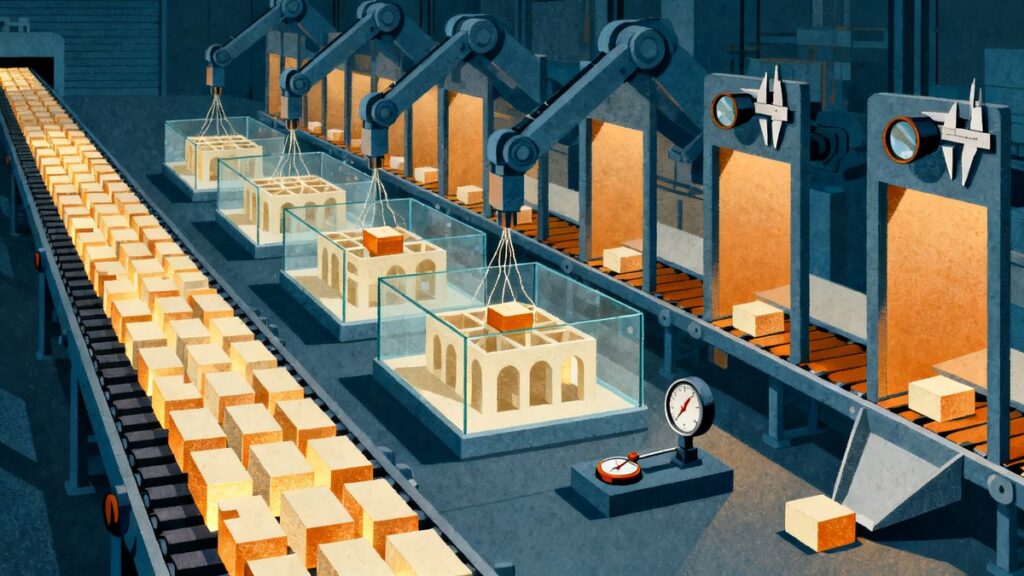
You query a powerful model, collect its outputs, and use those to train a smaller, cheaper model. Every major lab does this. Anthropic did it to create smaller Claude variants. Google does it. Meta does it. The technique is legitimate.
The line Anthropic is drawing is this: legitimate distillation uses your own model outputs.
What Alibaba allegedly did was query Claude en masse through fake accounts, then use those outputs to improve Qwen, Alibaba’s competing model. That violates terms of service. Illicit distillation.
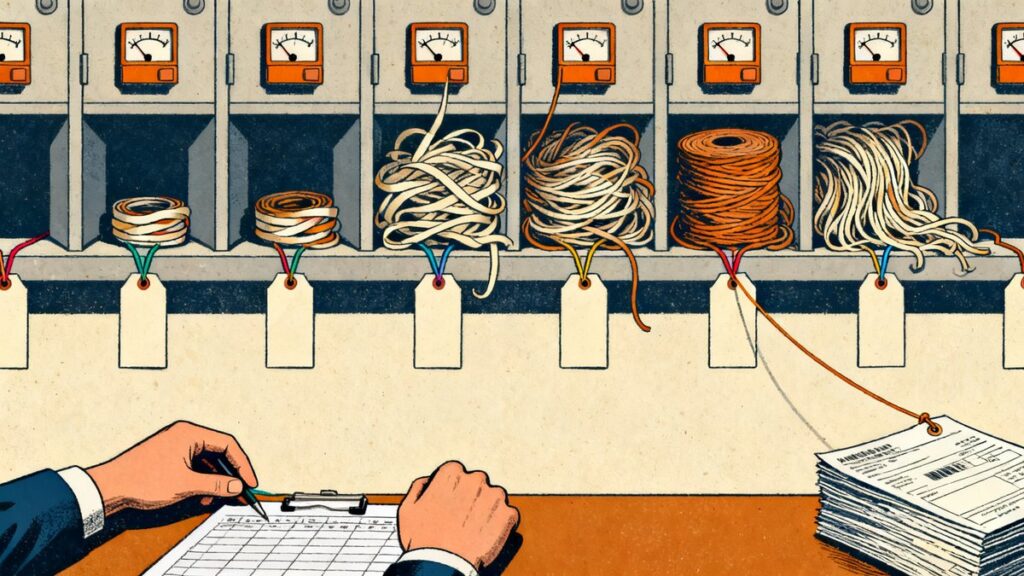
The attack itself is not technically sophisticated. Thousands of accounts, a large number of queries, systematic extraction of demonstrated behavior. No one cracked Claude’s weights. They just watched it work and replicated what they saw.
Why Small Operators Should Care About the Capabilities Alibaba Targeted
The capabilities Alibaba focused on are not random. According to Anthropic’s letter, the operators targeted agentic reasoning, complex task handling, tool use, and software engineering.
These are exactly the capabilities that make Claude valuable as a workflow engine.
Think about what you have built. You are probably running AI agents that handle multi-step tasks, use tools, make decisions mid-process. And write or modify code. Those are the capabilities Alibaba wanted. The distillation did not target Claude’s personality or conversational style.
It targeted the operational capabilities that make a model useful as infrastructure.
Here is the implication: if Alibaba could systematically extract Claude’s operational capabilities through mass API queries, so could anyone else.
A competitor could query your custom GPT setup the same way. A client could reverse-engineer your prompt chain by running similar inputs. The architecture of “query a frontier model, build a system on top” is not as proprietary as it feels.
The counterargument is real: distillation extracts behavior, not weights. The distilled model is often a shadow of the original.
But “often a shadow” is not “always a shadow,” and for specific capability bands, the gap can be narrow enough to matter commercially.
The Hypocrisy Problem Anthropic Cannot Escape
Anthropic has a legitimate complaint.
Systematic terms-of-service violations at industrial scale deserve a response. But the company is operating in a glass house and everyone can see it.
Anthropic built Claude partly by training on scraped copyrighted data. Books, articles, code repositories. They did not ask permission from the authors. Their legal defense is that training on data is not the same as copying it, which is a defensible position in some jurisdictions. But it is also the exact same argument Alibaba would make: they queried an API, they did not steal weights.
Neither side is clearly right on the IP question.
The honest position is that both are operating in a legal gray zone and both have incentives to define the rules in their favor. Anthropic wants strong IP protection for model outputs while benefiting from weak IP protection for model inputs. That is not a principled stance. It is competitive advocacy dressed as policy concern.
The geopolitical framing Anthropic is pushing is as well worth examining critically. The company wrote that distillation “converts significant investment into a substantial subsidy for our geopolitical adversaries.” That is inflammatory language designed to get Congress to act. But the same logic would apply to any foreign company querying an American API at scale, which raises the question of whether this is really about national security or about protecting Anthropic’s commercial position.
None of this means you should sympathize with Alibaba.
It means you should be skeptical of both sides and focused on your own exposure.
What You Should Actually Do With This Information
Anthropic is asking Congress to pass penalties and sanctions targeting companies that engage in large-scale illicit distillation. That legislative fight will take time and the outcome is uncertain. In the meantime, the practical risks for small operators are more immediate and more controllable.
Your custom prompts, your agentic workflows, your specific training data, your system integrations — those are your moat. The model capabilities themselves are becoming commoditized. What Alibaba’s distillation campaign actually demonstrates is that the underlying intelligence layer is getting harder to proprietary as a competitive advantage. The model can be queried. The outputs can be collected.
The capabilities can be replicated, at least partially.
The defensible position is not “I have access to a frontier model.” It is “I have built a specific system for a specific problem using that model.” That system — your data, your workflows, your integration layer — is what is actually hard to replicate.
You should too treat API access as the fragile thing it is. Regional restrictions, terms-of-service changes, pricing shifts, sudden deprecations. The Alibaba episode shows that access can be revoked or exploited by bad actors at scale. Build redundancies. Document your workflows. Do not assume the model you are using today will be available or unchanged in two years.
The distillation attack itself is not your problem.
The lesson embedded in it is: the infrastructure you are building on is less solid than it looks.
—
If you are running AI workflows for small business clients, the Alibaba story is a prompt to audit your dependencies.
What breaks if your current model provider restricts access? What is actually proprietary in your setup and what is just access to a shared capability? I help operators answer those questions through my AI automation practice. Reach out if you want a real review of what you own versus what you are renting.