Key Takeaways
– The Department of Energy projects data centers will consume up to 12% of all U.S. electricity by 2028 — a figure utilities were not prepared for.
– Frontier AI companies will need large data centers to train a single model.
– North American colocation vacancy has fallen to a low level, even after years of record construction.
– Much of the new data center capacity through 2029 is already pre-leased, meaning most supply is locked by large customers before it comes online.
– Effective inference costs could rise as GPU supply remains physically constrained through 2028.
The Department of Energy projects that data centers will consume up to 12% of all U.S. electricity by 2028. If that number doesn’t stop you, consider this: utilities built their grid expansion plans around decades of flat demand. They did not plan for AI. And right now, the AI boom is running headfirst into the physical limits of power grids, water supplies, cooling systems, and available land. This is not a future problem.
This is a present bottleneck that is already driving up costs, delaying deployments. And reshaping which companies can actually ship AI products at scale.
The uncomfortable truth is that AI’s biggest constraint in 2026 isn’t your model or your tokens.
It’s atoms. Concrete and copper and cooling water.
Why the Power Grid Wasn’t Built for This
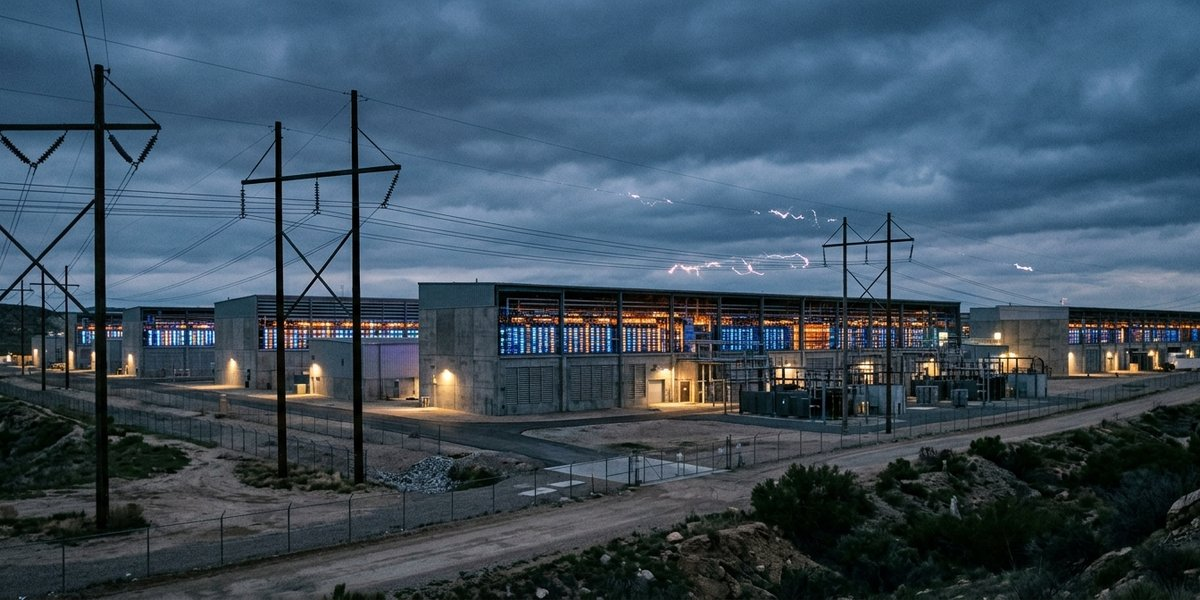
Electricity demand from data centers could reach a substantial percentage of total U.S. consumption by 2028, roughly a significant shift in power demand. The grid was engineered for a country where data centers were a rounding error. Now they are on track to be one of the largest categories of electricity consumption in the country.
Here is what that looks like on the ground. Frontier AI companies will need large data centers to train a single model. Total U.S. frontier AI demand could reach a considerable amount of gigawatts by 2028. For reference, a typical nuclear power plant produces about 1 gigawatt. We are talking about building the equivalent of multiple nuclear plants worth of data center capacity in under three years. That is not a scaling challenge. A construction and permitting crisis wearing an AI costume.
One analyst put it plainly: current infrastructure projections are likely too conservative by orders of magnitude relative to the energy frontier AI models will require. The people building the models are telling you directly that the numbers being used to plan the grid are wrong.
That should concern you more than another benchmark release.
Unlike traditional cloud workloads that distribute across dozens of regions, AI training requires large, concentrated power in specific locations. You cannot scatter a model training run across a dozen underutilized data centers the way you distribute a web application. The compute must be co-located.
That compounds siting and grid-connection challenges because you need both enormous power and the transmission infrastructure to deliver it. And you need it in a specific place, not somewhere on the grid.
The Bottlenecks Nobody Talks About
Power is the headline.
But there are at least three other constraints tightening around the AI buildout simultaneously. And each one compounds the others.
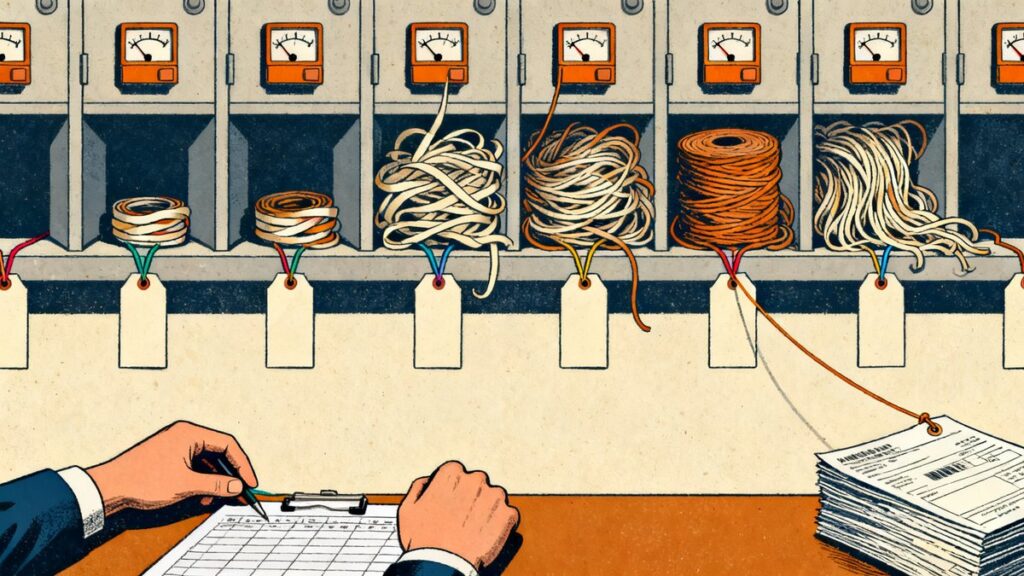
GPU supply is the first. Semiconductor capacity for DRAM and high-bandwidth memory is fully allocated for several years. The supply situation is physically constrained all the way through 2028 at minimum. New capacity cannot arrive fast enough. The analysts who track this closely are warning that effective inference costs could rise due to inelastic supply, rising demand, and tight GPU allocation.
Enterprises that do not secure compute capacity now risk being locked out entirely when their current contracts expire.
Water is the second, and it is the one that is already triggering community backlash.
Advanced cooling systems and large compute clusters significantly increase water usage. In drought-stricken regions where data centers are sited, this is not an abstraction. Meta’s data center in Arizona has been sued for drying up local water supplies. Communities in Virginia, Texas, and Oregon are watching data center campus proposals and asking who gets the aquifer when it runs dry. When you site a large compute cluster in a county that gets limited rainfall, you have made a political problem as well as an engineering one.
Skilled labor is the third. The education system cannot even begin to produce the millions of AI specialists now required. This is not a pipeline problem that a bootcamp can fix. It takes years to build the kind of infrastructure engineering expertise that data center construction and operations demand. And the industry is trying to add years’ worth of capacity in months.
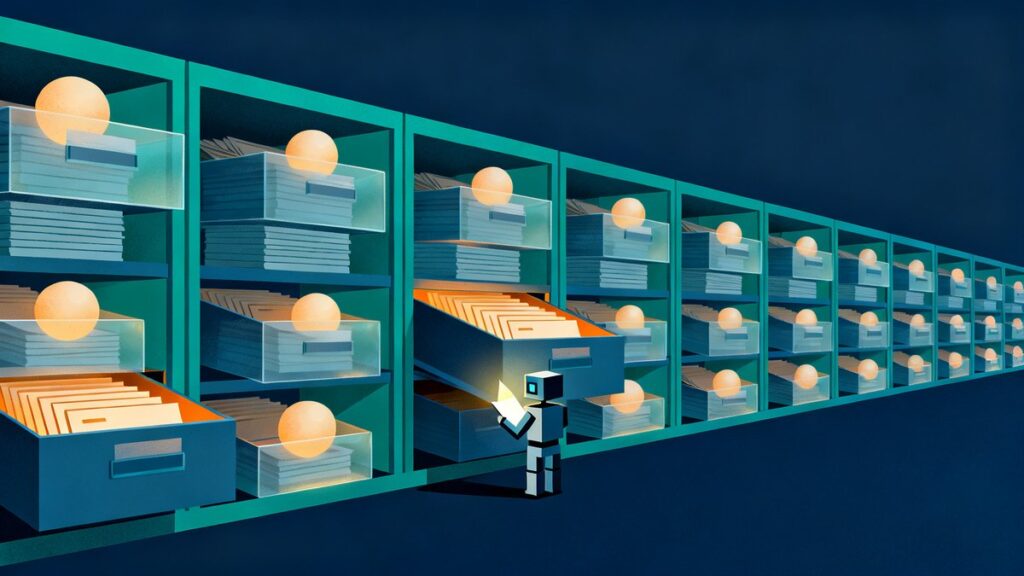
North American colocation vacancy has fallen to a low level, even after years of record construction.
And much of the new data center capacity through 2029 is already pre-leased. Most of the supply coming online is already spoken for by large customers before the concrete is poured. If you are a small business or an indie developer trying to secure AI compute right now, you are not just competing on price. You are competing for physical space in a building that does not exist yet, in a power zone that may not have capacity until later.
What This Means for You as an Operator
If you run a small business, an indie project, or a lean agency, you are probably thinking this is an enterprise problem. Microsoft and Google have the capital to build their own data centers. You do not.
That is true, but it misses the second-order effects.
When compute supply tightens, prices rise for everyone. Not just for frontier model training. For inference, for API access, for the cloud instances your application runs on. IDC found that only a small percentage of organizations say they have the infrastructure needed to move AI from pilot to production. Many are not ready. When enterprise AI projects fail, they do not fail quietly. They consume compute, crowd the market, and drive up costs for everyone competing for the same capacity.
Gartner predicts that by 2026, a significant portion of enterprise AI initiatives will fail not given that of model quality. But as of underpowered, underprepared infrastructure. That is a lot of failed projects and wasted budget competing for the same physical resources.
Here is the part that should land for you: the operators who will navigate this well are not the ones with the biggest models. They are the ones treating power, water, and physical capacity as strategic assets rather than abstractions. That means thinking about where your workloads run, not just how they run. It means locking in long-term cloud commitments when you have the cash, since spot pricing during a shortage is not a market — it is an auction where you lose. It means evaluating edge and distributed AI architectures for workloads that do not need to hit a central data center.
The World Economic Forum has called for AI data centers to be treated as critical infrastructure, comparable to ports and power stations.
Some regions have designated data centers as critical infrastructure. The EU’s NIS2 framework explicitly includes cloud and data center providers. This is the direction of travel. Physical AI infrastructure is becoming a national security and economic competitiveness concern, which means the regulatory and permitting environment around it will get more complicated, not less.
What You Should Actually Do
The crisis is not coming. It is here. Data center power consumption is on track to hit 12% of U.S. electricity by 2028, GPU supply is locked through at least 2028. And colocation vacancy is at a low level. These are not projections that might be wrong. They are current conditions that are tightening.
If you are building with AI today, treat compute capacity as a finite resource you need to secure, not an infinite cloud you can scale into whenever you want.
Audit your current cloud commitments. Understand when your reserved instances expire and what the spot market looks like for your workload profile. If you have workloads that can run on smaller, distributed infrastructure, explore that now rather than waiting for a capacity crunch to force the decision.
The operators who will be in trouble in 18 months are the ones who assumed the cloud would always scale elastically.
It will not. The grid was not built for this. And the people building the infrastructure cannot turn it around in a quarter.
If you want to dig into the data center cost figures — the costs are considerable — that number alone tells you this is not a problem that responds to software iteration. Physical infrastructure moves on years, not sprints.
The AI boom is real. So is the hard wall it is about to hit.
Sources: DataCanopy | Sidecar AI | WEF | AEI