Open-source multi-agent frameworks stopped being conference demos, and nobody threw a party about it.
Smolagents sits at 29,177 GitHub stars on a one-line pitch. Minimal agents that write code to act. And the tools around it are now pickable infrastructure. Which changes the question you should be asking. It isn’t “which framework is winning.” It’s “which failure mode can I live with when a run goes sideways at the worst possible moment.”
Here’s the short version if you’re choosing this quarter.
CrewAI is the Python default for production-ready agent workflows. AutoGen is the conversational one, where agents collaborate asynchronously on their own schedule. SuperAGI runs many agents concurrently from a dev-first setup.
And Open Multi Agent is the TypeScript option that drops into Node.js and keeps every run inspectable.
One bias up front: I run a small shop, my name’s on the invoice.
And I care more about answerability than feature lists.
That lens shapes everything below.
The Best Open-Source Multi-Agent Frameworks: A Shortlist
Four frameworks, four genuinely different bets.
CrewAI calls itself a “Fast and Flexible Multi-Agent Automation Framework,” and it’s the one I’d hand a Python shop that needs to ship.
It’s open-source Python with high-level abstractions and low-level APIs for building agent-driven workflows (GitHub).
And the split that matters is Crews versus Flows. A Crew is autonomous collaboration. You leave the agents alone. A Flow is event-driven control. You intervene at exact moments. AWS Prescriptive Guidance describes CrewAI as focused specifically on autonomous multi-agent orchestration, which matches how the project carries itself.
What sold me wasn’t the pitch, it was the boring stuff. The docs list guardrails, memory, knowledge integration. And observability as first-class features for designing agents and orchestrating flows (CrewAI docs). And observability is the word most frameworks treat as an afterthought. Crews run two ways: sequentially, tasks executed one after another, or hierarchically, where a manager agent automatically delegates to the other agents. If you want it concretely, there’s a Hashnode tutorial that builds a legal-compliance workflow. Legal review, compliance, case law research, drafting.
As four specialized agents in a Crew with `process=Process.sequential`, then fires it with `crew.kickoff()` (Hashnode).
LangChain’s own roundup calls CrewAI “a standalone multi-agent orchestration framework built around a role-based mental model where each agent has a defined persona, a set of tools. And a specific task within a larger crew” (LangChain) and tags it best for rapid prototyping of role-based workflows.
Fast to stand up, opinionated about structure. That’s the honest framing.
AutoGen, released initially by Microsoft, makes the opposite bet: conversational, collaborative agents by default. Its repo defines it as “a programming framework for agentic AI” for multi-agent applications that act autonomously or work alongside humans (GitHub). And AWS describes a flexible architecture emphasizing asynchronous, event-driven interactions between agents. Your agents talk on their own schedule instead of waiting their turn in a script. That’s the right shape if your workflow really is a negotiation. If it’s a straight pipeline, you’re paying for flexibility you’ll never touch.
SuperAGI bills itself as “a dev-first open source autonomous AI agent framework,” running concurrent agents seamlessly with tool extension, plus Workflows that automate tasks using ReAct LLM’s predefined steps.
The reliable, unglamorous kind of automation (GitHub).
Straight talk: concurrent agents sound great in a demo.
And in a small shop three agents on one job has usually meant a tripled token bill for the same output. I ran it once, watched the meter, got shy.
That’s one data point from someone who hasn’t shipped a SuperAGI build to a paying client, so weight it accordingly.
One more worth knowing. PraisonAI describes itself as a “production-ready Multi AI Agents framework” with self-reflection, wrapping PraisonAI agents, AG2 (formerly AutoGen). And CrewAI into one low-code package (GitHub). You create “Agent” and “Agent Team” components, run them sequential or parallel. And drive everything from a local web UI at http://localhost:7861. Port 7861. Nobody picked that number to look good in a brochure. The same graph is expressible in YAML with no Python at all, which is either liberating or a trap depending on how much you like debugging indentation.
I genuinely don’t know yet.
Open Multi Agent is the TypeScript entry, an orchestration framework that drops into any Node.js backend (GitHub).
Hold that one. Its best feature isn’t in the marketing bullet about abstractions, and I’ll get to it two sections down.
What GitHub Stars Actually Tell You About Multi-Agent Frameworks
A GitHub-curated agent list gives a snapshot of where attention actually sits.
I’ve added the four I’d recommend, with a confession: that list doesn’t track them. And I didn’t re-crawl each repo’s current star count before this went out — so those cells stay honest rather than plausible.
| Framework | Stars | Language | The pitch |
|—|—|—|—|
| Smolagents | 29,177 | Python | Minimal agents that write code to act |
| Semantic Kernel | 28,537 | C# | Plugin-based AI integration for .NET and Python |
| CrewAI | not verified | Python | Crews and Flows, role-based orchestration |
| AutoGen | not verified | Python | Conversational, async agent collaboration |
| Hive | 11,018 | Python | Multi-agent runtime aimed at production |
| Openwork | 10,921 | not listed | Open-source AI coworker platform |
| SuperAGI | not verified | Python | Dev-first, concurrent agents plus tools |
| Open Multi Agent | not verified | TypeScript | Node.js orchestration, replayable runs |
| AG2 | 4,904 | Python | Community fork of AutoGen, now an AgentOS |
| AGiXT | 3,214 | Python | Multi-provider agent platform with command chaining |
| Aeon | 716 | TypeScript | Runs unattended on GitHub Actions, self-healing |
A star count is like a restaurant’s follower count — it tells you where the crowd is eating, not whether the kitchen survives a twelve-top on a Friday night. Smolagents and Semantic Kernel sit on top at 29,177 and 28,537. And neither is a multi-agent orchestrator in the CrewAI sense: one’s deliberately minimal, the other is plugin-based AI integration for .NET and Python. Hive, whose whole pitch is “multi-agent runtime aimed at production,” sits at 11,018. Roughly a third of a minimal agent library’s stars. The market keeps voting for small, legible tools over orchestration ambition.
The bottom rows carry the interesting signals.
AG2 at 4,904 is a community fork of AutoGen now calling itself an AgentOS. And a fork existing at all means the original’s direction split its users badly enough that people rebuilt. Aeon sits at 716 stars doing unattended runs on GitHub Actions with self-healing.
The smallest project in the set taking on the hardest problem in the set: what happens when nobody’s watching.
Choosing a Multi-Agent Framework: Replay vs. Black Box
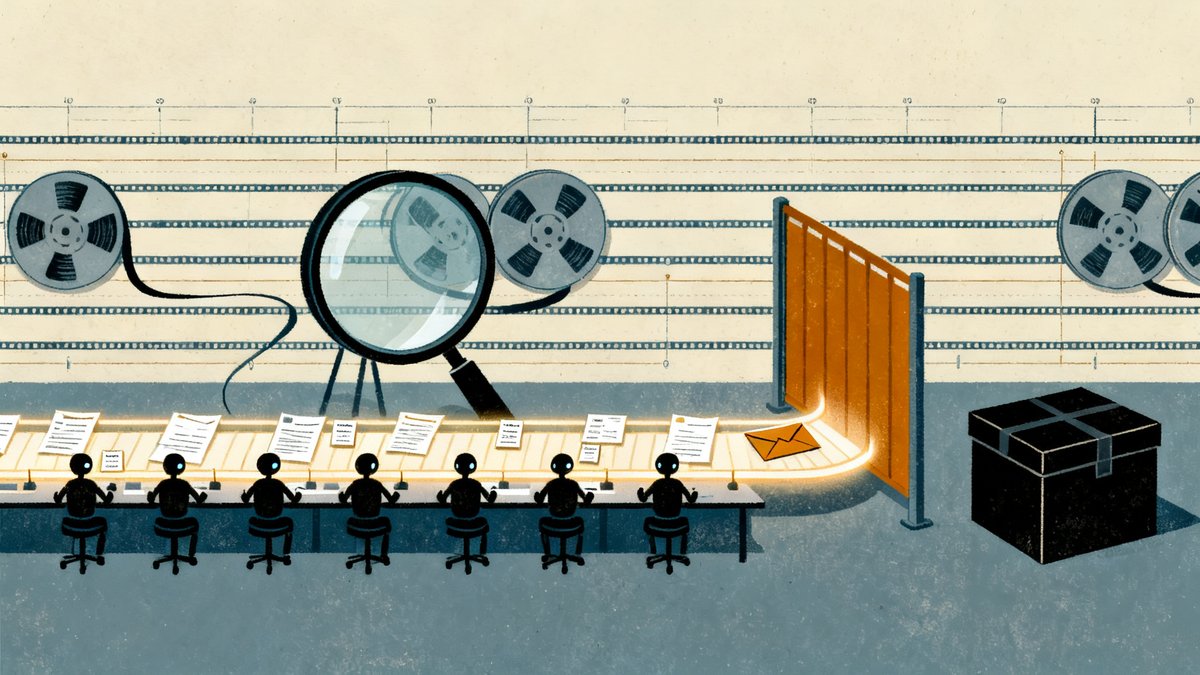
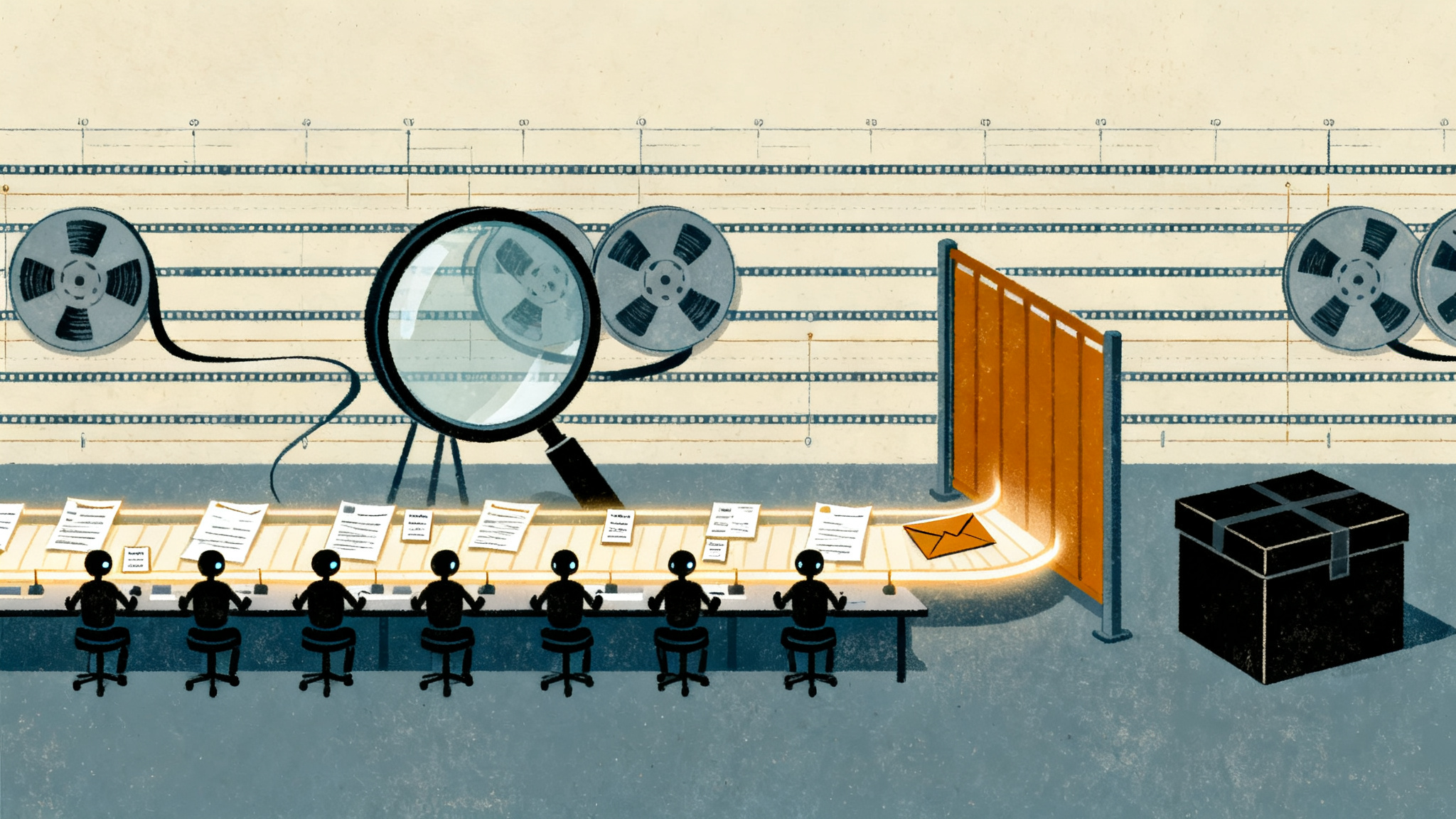
Here’s the feature I price first now. Open Multi Agent’s standout line is buried in its own description: a coordinator turns one goal into a task DAG at runtime, a deterministic scheduler executes it across the team. And the whole run stays data you can inspect, approve, and replay. The project pauses for approval on consequential actions and leaves a verifiable record of every run.
When I scope an agent automation, success isn’t decided by how many agents the framework supports. It’s decided by what happens the week something goes sideways and a client asks why the system emailed their customers at 2 a.m. A replayable run turns that conversation from archaeology into a code review. A black-box run turns it into a shrug, and a shrug costs you the account.
So which do you trust more. A system that heals itself quietly, or one that stops and asks before it does something consequential? Notice the tension across this whole market: Aeon’s answer to unattended trust is self-healing; Open Multi Agent’s is approval gates plus a verifiable record. Two honest answers to the same question, and neither one shows up in a star count.
Most framework comparisons rank on popularity and feature lists.
For a shop with your name on the invoice, rank on blast radius and answerability instead.
How Small Teams Should Choose a Multi-Agent Framework
You probably don’t need a crew of agents.
The pattern I keep seeing: a single well-instrumented loop with a replayable log beats a committee of role-playing agents, costs less.
And fails in ways you can explain to a client without sweating through your shirt.
Start with the smallest tool that covers the job — Smolagents if the task is one agent writing code to act, CrewAI’s Flows the moment you need to intervene at specific steps, full multi-agent orchestration only when the work genuinely involves negotiation between tasks. Then pick by failure mode, not by stars. If the workflow touches anything a customer sees, choose the option that pauses for approval on consequential actions and leaves a verifiable record. Name the failure mode first, pick the framework second.
That’s the lens I use when a client asks for an agent build, and it’s what my shop does. Bring the workflow and I’ll tell you straight whether it needs a crew of agents or one well-instrumented script.
FAQ: Open-Source Multi-Agent Frameworks
What is the best open-source multi-agent framework? There isn’t one winner, and anyone claiming otherwise is selling something. CrewAI is the safest default for a Python team standing up role-based workflows fast — LangChain’s own resource tags it best for rapid prototyping of exactly that. AutoGen fits when the work is genuinely conversational.
If unattended reliability matters most, the smaller replay-focused and self-healing projects deserve a harder look than their star counts suggest.
Is CrewAI or AutoGen better for production?
Depends on the shape of the work. CrewAI gives you sequential or hierarchical orchestration (a manager agent delegating), guardrails, memory. And observability baked in, plus Flows for precise event-driven control. AutoGen gives you asynchronous, event-driven, conversational collaboration where agents negotiate on their own schedule. Straight pipeline, pick CrewAI. Actual negotiation between tasks, and AutoGen earns its complexity. Worth noting AG2 exists as a community fork of AutoGen.
That tells you its direction split some of its users.
What are Smolagents? Minimal agents that write code to act, sitting at 29,177 GitHub stars on that one-line pitch. Deliberately not a multi-agent orchestrator — no crews, no manager agents. And that’s the point. If your job is one agent doing one thing legibly, it’s the project with the most attention in the entire list above.
What is PraisonAI?
A low-code “production-ready Multi AI Agents framework” with self-reflection that integrates PraisonAI agents, AG2 (formerly AutoGen). And CrewAI under one roof. You define Agent and Agent Team components, run them sequential or parallel. And drive it from a local web UI at http://localhost:7861. The same graph is expressible in YAML with no Python at all.
Sources
– https://github.com/crewaiinc/crewai
– https://crewai.com/open-source
– https://docs.crewai.com/
– https://docs.aws.amazon.com/prescriptive-guidance/latest/agentic-ai-frameworks/crewai.html
– https://docs.aws.amazon.com/prescriptive-guidance/latest/agentic-ai-frameworks/autogen.html
– https://github.com/microsoft/autogen
– https://github.com/TransformerOptimus/SuperAGI
– https://github.com/open-multi-agent/open-multi-agent
– https://github.com/mervinpraison/PraisonAI
– https://farzzy.hashnode.dev/building-a-legal-ai-agent-using-azure-ai-search-azure-openai-llamaindex-and-crewai
– https://www.langchain.com/resources/ai-agent-frameworks
– https://github.com/kaushikb11/awesome-llm-agents