Key Takeaways
– OpenAI is merging ChatGPT, Codex, and Atlas into a single desktop super app. Called a “full strategic reset” and “bigger than a product update”
– The company is raising $10 billion, pushing valuation to $850 billion, scaling from 4,500 to 8,000 employees as it prepares for a public offering
– Sora’s standalone app got cut after six months; a rumored $1 billion Disney licensing deal never happened
– OpenAI abandoned instant checkout inside ChatGPT after Walmart, Shopify, and Etsy pulled out, citing substantially lower conversion rates than their own platforms
– For small operators: the free chatbot you rely on is being reshaped into a paid company platform. Your workflow dependencies need an audit.
What Is OpenAI’s Desktop Super App?
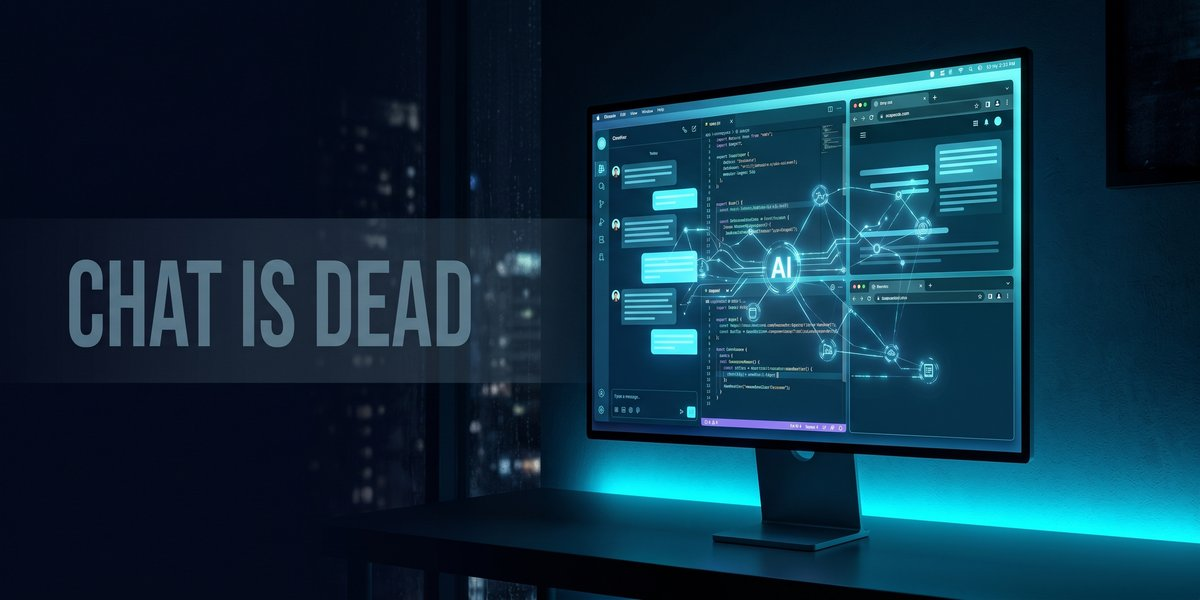
One environment. Three tools. ChatGPT, Codex, and Atlas merged into a single desktop product where you browse in Atlas, ask ChatGPT about it, then drop into Codex to write or debug code without losing context.
That’s the pitch.
But here’s the thing.
A senior OpenAI staffer told the Financial Times something blunt this week: “Chat is dead.” Not dead as in broken. Dead as in irrelevant to the business model.
The company that launched the AI wave with a chatbot is dismantling that identity on purpose.
And if you run a small business or solo operation that leans on ChatGPT, this matters more than it looks.
Here’s the part nobody tells you straight: your free access is being restructured. OpenAI’s building a utility, not a product. Utilities get regulated. Utilities get monopoly protection. Utilities get premium valuations. That $850 billion number isn’t hype. It’s the IPO target, and everything about the desktop super app is an audition for public markets.
The Consolidation Tax Nobody Talks About
Here’s the part that doesn’t get covered enough: when a platform consolidates, it charges a consolidation tax.
OpenAI isn’t merging these tools out of generosity. It’s merging them to lock in company customers and accumulate richer data for advertising and monetization.
The writing is already on the wall.
OpenAI hired Meta people to lead ChatGPT ads. It’s deploying “technical ambassadors”. Specialists embedded inside customer businesses to extract more value from OpenAI tools. That’s not a product team.
That’s a company sales army.
The company abandoned its instant checkout shopping feature inside ChatGPT.
Walmart, Shopify, and Etsy all pulled support after seeing conversion rates inside ChatGPT that were substantially lower than their own platforms. OpenAI’s response: pivot from owning the transaction to facilitating product discovery and routing. They still want the data. They just stopped pretending they could own the purchase.
For you, the operator, this means the tools aren’t getting cheaper or simpler. They’re getting bundled into a platform that wants to own every step of your workflow. From browsing to coding to whatever comes next.
The moment your workflow depends on a consolidated super app with no real competition at that scale, the use flips.
Why Now: IPO Pressure and the $850 Billion Number
One thing that gets lost in the coverage: this pivot is reactive, not proactive.
Anthropic’s single-app desktop platform created direct pressure on OpenAI to consolidate its own tools.
The competitive timeline compressed. OpenAI went from a chatbot company to an infrastructure provider because it had to. Not since it planned to.
The financial picture clarifies the urgency.
OpenAI raised a $10 billion round pushing its valuation to $850 billion. It’s scaling from 4,500 to 8,000 employees by year-end. It killed Sora’s standalone app after six months, citing excessive compute demands and limited real-world impact. The $1 billion Disney licensing deal that never happened should tell you something: the moonshots are getting pruned. Company: cutting side quests and doubling down on what pays.
Sam Altman told an audience at the BlackRock Infrastructure Summit that intelligence will eventually be bought on a meter, like electricity or water.
That’s the framing. OpenAI isn’t building a product. It’s building a utility.
You don’t have to love it. But you should understand what you’re building on top of.
What Small Operators Should Actually Do
Let me cut through the coverage and give you something practical.
If you depend on ChatGPT’s free or low-cost tier for anything that matters to your business, this is your signal to audit those dependencies. Not panic — just audit. Map what you use, what it costs.
And what happens if the experience shifts toward paid tools or consolidated workflows you can’t control.
The agents angle is real and it’s coming fast. The super app is explicitly designed as a foundation for agentic AI workflows. Systems that carry out multi-step work autonomously inside one platform.
That changes the competitive terrain for every coding tool, every automation stack, every SaaS that currently sits between you and your AI assistant.
The question isn’t whether OpenAI becomes a bigger platform. It will.
The question is whether your workflow is portable when that happens.
Start with one honest assessment: what would break if your ChatGPT workflow got 30% worse tomorrow, or got bundled into a product you don’t control?
If the answer is “a lot,” you already know what to do.
This week’s pivot isn’t a product announcement. It’s a direction statement. OpenAI is telling you where the platform goes. The only question is whether you’re paying attention before the lock-in gets real.
Sources
Financial Times — OpenAI “Chat is dead” reporting
OpenAI $10 billion raise coverage
Sam Altman BlackRock Infrastructure Summit remarks