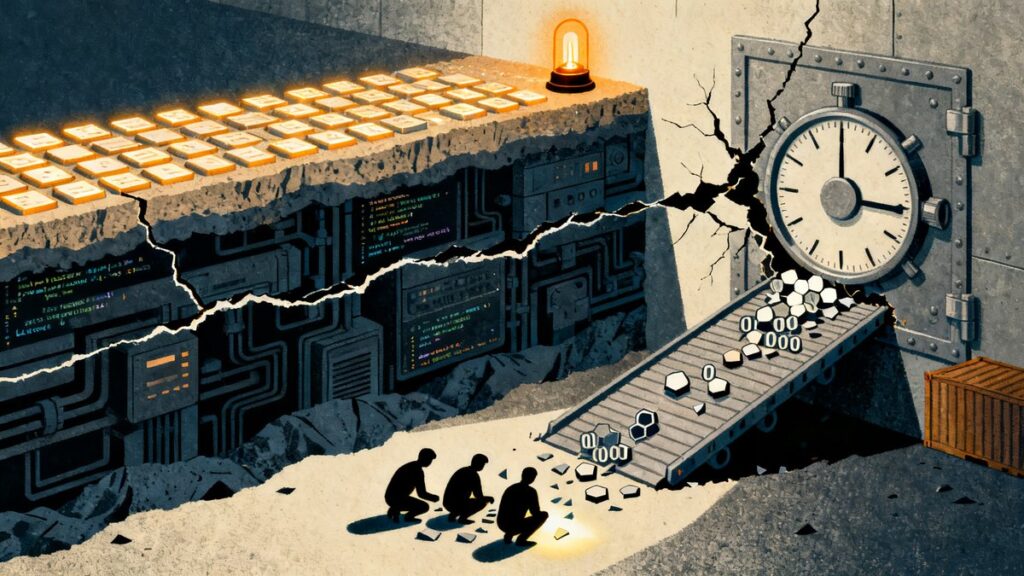
OpenAI’s DALL·E API shutdown arrived May 12, 2026, and it retired more than two models. OpenAI had notified developers on November 14, 2025 that the DALL·E model snapshots were deprecated and would be removed from the API on May 12, 2026. On that date, calls to `POST /v1/images/generations` with `”model”: “dall-e-2″` or `”model”: “dall-e-3″` started returning errors. And the `/v1/images/edits` and `/v1/images/variations` endpoints that relied on DALL·E 2 no longer function. The stated replacement is the GPT Image family. The story did not end there: the DALL-E GPT inside ChatGPT was retired August 30, 2026. And three more image models shut down December 1, 2026, every one of them consolidating onto `gpt-image-2`. Count the DALL-E GPT and that is six image models gone inside a single year, with one destination left standing.
The Full Timeline: Six Retirements, One Destination
OpenAI’s policy page keeps a level tone about all of it. “As we launch safer and more capable models, we regularly retire older models,” the deprecation docs explain. And the mechanics are blunt.
Once a model is announced as deprecated it carries that status immediately, runs until its assigned shutdown date.
And after that date it “will no longer be accessible.”
The full schedule fits in one table:
| Shutdown date | What retired | Official replacement |
|—|—|—|
| May 12, 2026 | `dall-e-2`, `dall-e-3` | `gpt-image-1` or `gpt-image-1-mini` |
| August 30, 2026 | DALL-E GPT in ChatGPT | Not listed in the release note |
| December 1, 2026 | `gpt-image-1-mini`, `gpt-image-1.5`, `chatgpt-image-latest` | `gpt-image-2` |
The ChatGPT side of this is the detail most people missed. One report notes that OpenAI retired the official DALL-E GPT from ChatGPT on August 30, 2026, “announced in a July 31 release note rather than a blog post.” No launch event, no headline on the company blog. If your workflow lived inside ChatGPT instead of the API, you learned about it by noticing the tool stopped existing.
The December wave came via a quieter channel too. According to an industry alert, “OpenAI announced June 2 that three image models shut down December 1, 2026: gpt-image-1-mini, gpt-image-1.5, and chatgpt-image-latest. All three migrate to gpt-image-2.” A separate news account adds that DALL·E 3 is “no longer accessible for new projects,” and any request still using the `dall-e-3` model ID returns an error.
OpenAI’s Own Migration Advice Had A Shelf Life
This is the part that should sting. When OpenAI’s deprecation table listed what replaces DALL·E 2 and DALL·E 3, the recommended replacements included `gpt-image-1-mini`. Developers who took that option in good faith are now scheduled to do the whole migration again.
The same alert puts it plainly: “Developers who migrated from DALL-E 2 or DALL-E 3 to gpt-image-1-mini as recently as May 2026 now face a second migration within six months, compressing their planning horizon.”
I don’t read this as bad faith. `gpt-image-1-mini` was a legitimate recommendation in May. And OpenAI’s own developer retrospective describes it as the model that made “native image generation more cost efficient.” The problem is structural rather than dishonest. A migration target is a perishable good, and vendors never label which recommendation is the sturdy one.
So my rule stands after this episode: when a platform hands you a menu of replacements, skip the budget tier and migrate straight to the newest flagship. The budget option exists to be consolidated out from under you. Flagship: where everything else is being pointed, which is exactly what happened when all three December retirements converge on `gpt-image-2`.
Six Months’ Notice Is A Policy, Not A Promise
OpenAI’s stated policy, as the alert cites it, grants “6+ months advance notice for generally available models,” and the June 2 announcement for the December 1 shutdowns “meets that minimum.” A Reddit thread about the `gpt-image-1-mini` deprecation called the six-month heads-up “quite fair.” OpenAI’s docs frame the courtesy the same way: “We provide advance notice before retiring models so customers have time to plan and migrate.”
That notice is fair per model and brutal per portfolio.
Each individual deprecation gets its minimum window, and each window is technically generous. What no policy covers is the compounding: you were told to move by May 12. And now you are told to move again by December 1. Two consecutive six-month windows sound like breathing room until you notice they run back to back.
For a solo operator, one migration is a scheduled weekend.
Two forced migrations in a year is a standing line item on your roadmap.
And the email courtesy only reaches “customers who are actively using the model,” per the deprecations page. If the notification lands with a former contractor or an inbox nobody checks, your effective notice period is zero.
One Model, One Endpoint, One Point Of Failure
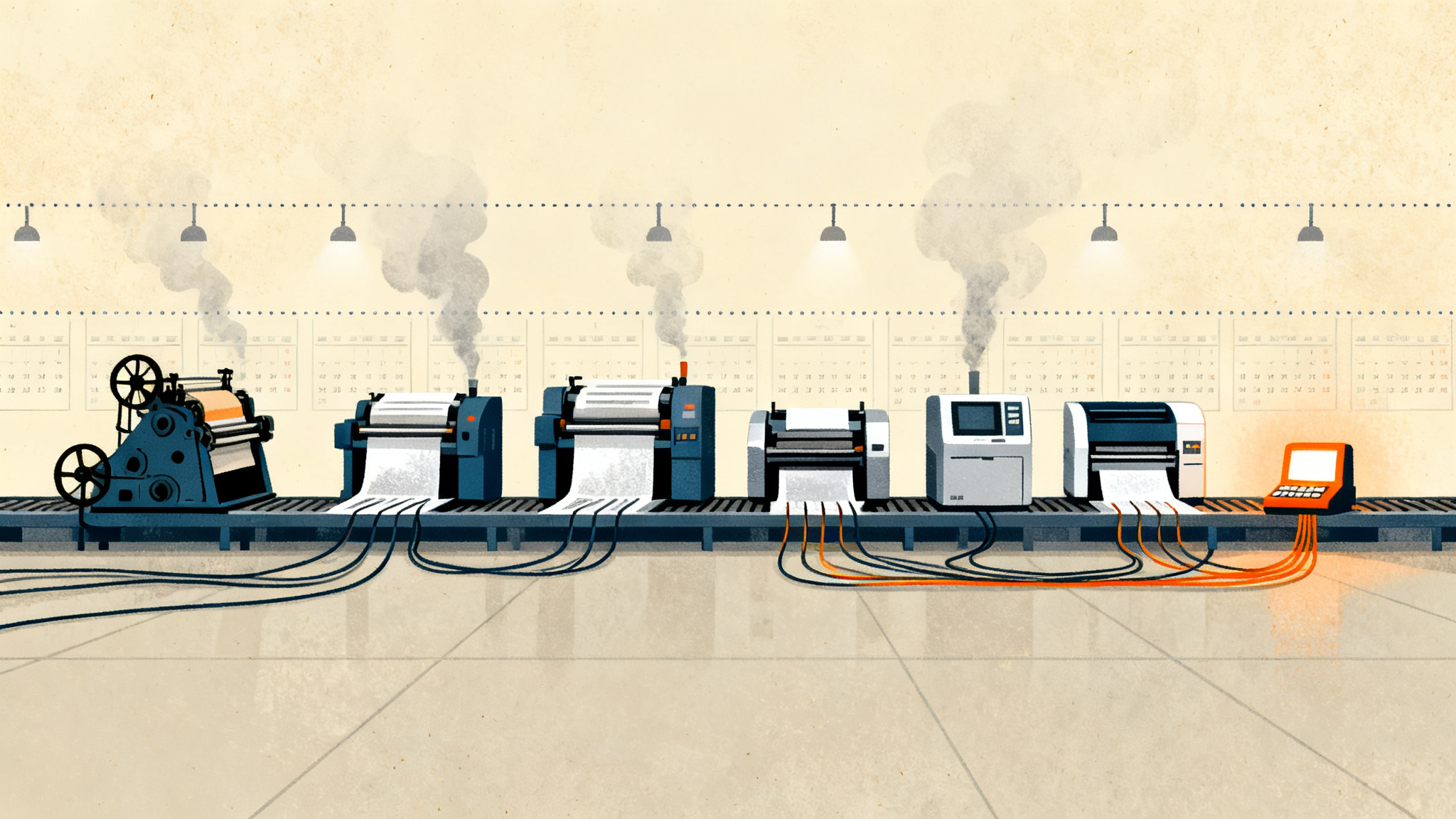
One analysis tracking the changes reads the six retirements as OpenAI’s entire image line collapsing into GPT Image 2: “Instead of standalone, single-purpose models, OpenAI is betting on image generation built directly into its large language models.” OpenAI’s current image generation guide confirms the destination: “The OpenAI API lets you generate and edit images from text prompts using GPT Image models, including our latest, `gpt-image-2`.” The Images API now offers two endpoints, Generations and Edits, with `gpt-image-2` reachable at `POST /v1/images/generations`.
The lineage tells you how fast the ground moves. OpenAI’s 2025 developer retrospective praised GPT Image 1 for introducing “a new generation of image generation models,” GPT Image 1 mini for making generation more cost efficient. And GPT Image 1.5 as “our most advanced generation model.” Read those descriptions next to the December 1 shutdown list. Two of the three now describe models scheduled for retirement, which is how quickly marketing copy ages when the roadmap moves at this speed.
The consolidation makes the API easier to learn and riskier to depend on.
When every image call you own funnels through one model at one vendor, a single pricing change, rate limit, or policy shift lands on your entire image output at once.
My advice is to treat model IDs as configuration rather than code. And to version your prompt libraries per model, because prompts do not transfer cleanly between image families. The May shutdown was survivable with a one-line config change. December will be too, if the adapter is already in place.
What To Do Before December 1
– Grep your repos for `dall-e-2`, `dall-e-3`, `gpt-image-1-mini`, `gpt-image-1.5`, and `chatgpt-image-latest`. Every hit is a scheduled outage.
– Migrate straight to `gpt-image-2` at `POST /v1/images/generations` and skip the intermediate stops.
– Put the model ID behind an adapter so the next deprecation is a config change, not a redeploy.
– Check the deprecations page monthly. OpenAI emails active users, but the page is the source of truth.
Consolidating onto `gpt-image-2` simplified OpenAI’s image stack and concentrated all of its risk in one place.
Small teams can live with that trade. But only if the stack is built to swap models in an afternoon. That is the entire playbook, and December 1 is closer than it looks. My agency builds and maintains exactly these pipelines for small businesses.
So if your stack still references a retired model, reach out and we will map the migration before the deadline maps it for you.