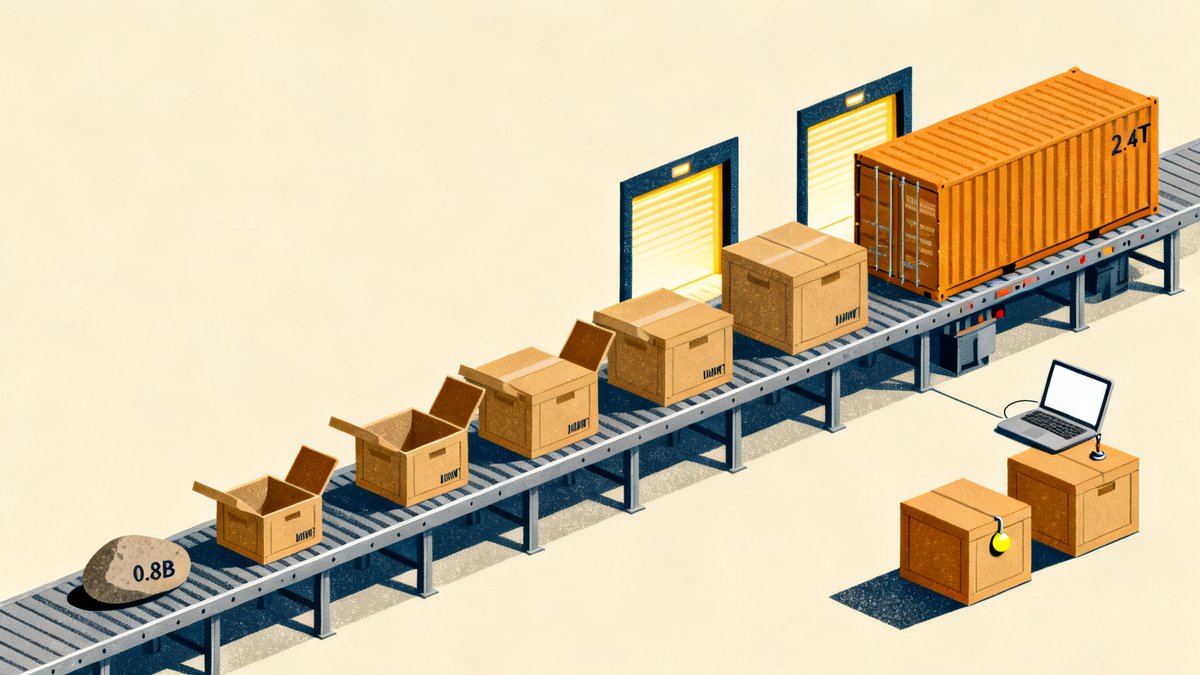
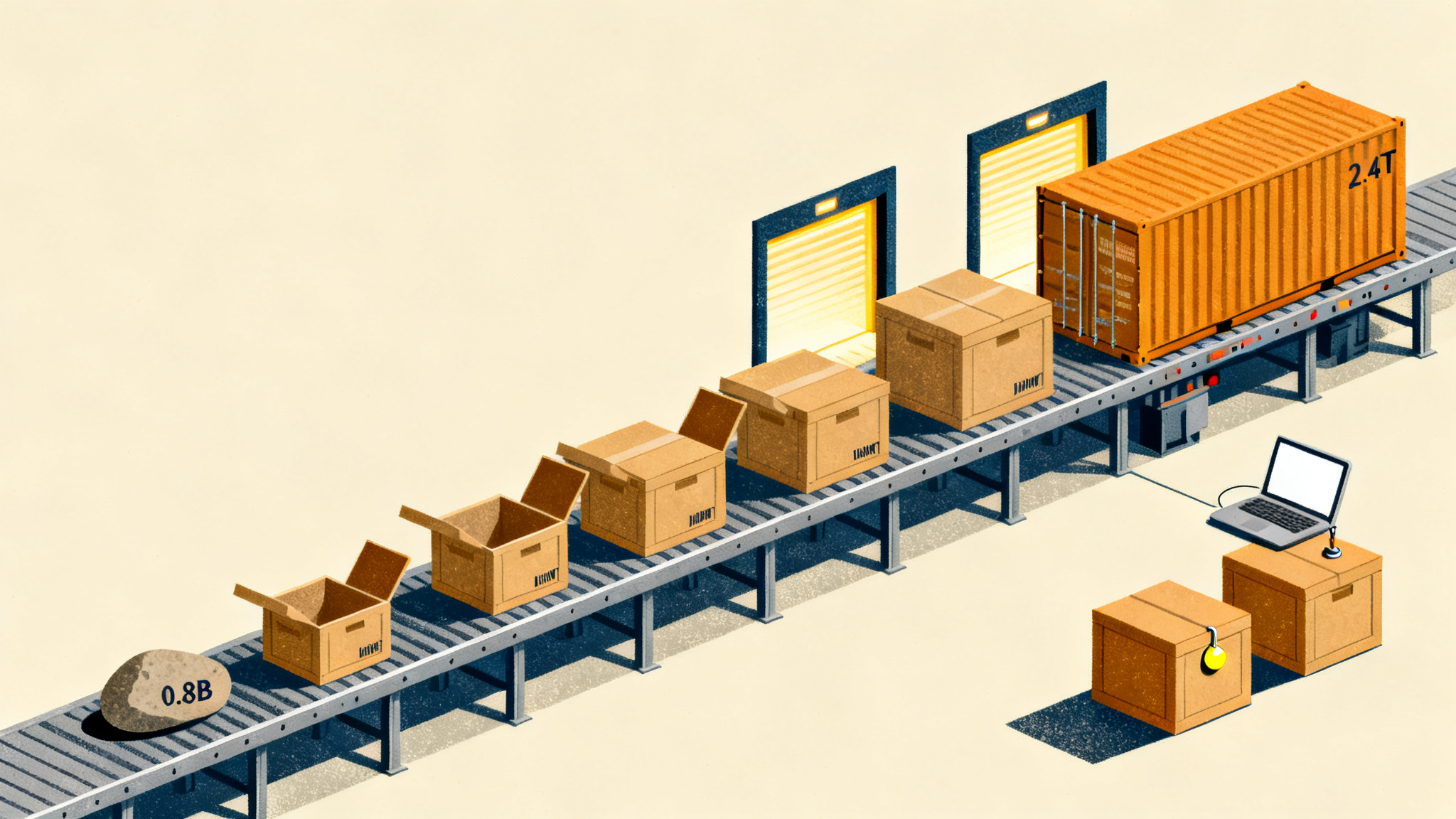
Qwen local models run from 0.8B parameters up to 2.4T-A95B. Across 2026 the family shipped open weights at every point between those two extremes, to both Hugging Face Hub and ModelScope.
That is most of the case for Qwen becoming the default local-model standard. Coverage plus plumbing. No benchmark trophy appears anywhere in it. And that is deliberate, because scores age out in weeks while pull commands do not.
Per Qwen’s own documentation, most LLM frameworks and applications download a model’s files from Hugging Face automatically once you specify a model ID such as Qwen/Qwen3.8-27B. Users who cannot reach Hugging Face Hub get pointed at ModelScope instead. For a lean operation this matters: one family covers small fast tasks, heavier reasoning, agent work. And image generation, since the catalog spans text, multimodal, image, speech, translation, agent, and world-model projects.
Everything below comes from Qwen’s GitHub release notes. Right source for what shipped and when, and a self-interested one for anything that resembles marketing. Dates, model names, distribution mechanics. Checkable things.
Every Size Tier, February To October
The release log in the Qwen3.8 repo is less a changelog than a plan to occupy every hardware tier a local operator might own.
The cadence, exactly as shipped:
| Date (2026) | Release | What it is |
|—|—|—|
| Feb 16 | Qwen3.5-397B-A17B | First Qwen3.5 drop, a 397B MoE flagship |
| Feb 24 | Qwen3.5-122B-A10B, Qwen3.5-35B-A3B, Qwen3.5-27B | Mid and small MoE tiers plus a dense 27B |
| Mar 2 | Qwen3.5-9B, 4B, 2B, 0.8B | Small models for modest machines |
| Apr 16 and Apr 22 | Qwen3.6-35B-A3B, Qwen3.6-27B | Generation bump in the workhorse tiers |
| Aug 12 and Aug 14 | Qwen3.8-2.4T-A95B, Qwen3.8-27B | Flagship scale, then the practical 27B |
| Aug 26 | Qwen3.8-Flash-Next | Multimodal MoE, weights open |
The Aug 12 and Aug 14 pair is the entry I read twice, as flagship scale followed by the practical 27B two days apart looked at first like a typo in the log.
It is not. The rhythm.
A 0.8B model posted on March 2 and a 2.4T-A95B model posted on August 12 share one naming scheme, one set of quirks, one release cadence. You learn the family once instead of four times. For a small operation that beats any individual model’s score, since the real cost of local AI is rarely the model itself. The cost is the hours spent relearning a new family every quarter.
Mapped onto hardware, the ladder runs like this. Sub-10B — cheap classification, drafting, modest machines; Feb 24’s small MoE tiers and Mar 2’s dense smalls live here. Then 27B through 35B-A3B, the daily workhorse load, from the dense 27B on Feb 24 through the 35B-A3B class carried into 3.6 in April. At the top, 397B through 2.4T-A95B for rare jobs that justify the compute, anchored by the Feb 16 and Aug 12 flagship drops.
Which tier wins on quality for your tasks?
I do not know.
I have not run the 2.4T-A95B, since the machine on my desk does not go there. And I would be guessing. That is a claim you test on your own workloads.
Two Doors Instead Of One
Benchmark wins expire in weeks.
Pull commands compound.
Qwen documents Hugging Face Hub and ModelScope as its two official weight sources, with most frameworks fetching by model ID automatically.
The model you read about on Monday runs in your stack by Tuesday. No custom tooling. No integration project.
The fallback plumbing is what marks this as deliberate rather than lucky. For users unable to access Hugging Face Hub, Qwen says it strongly recommends ModelScope. The docs go further and ship environment-variable switches for serving frameworks: set SGLANG_USE_MODELSCOPE=true or VLLM_USE_MODELSCOPE=true and your SGLang or vLLM stack pulls from ModelScope instead. One line, not a migration. Status pages never update fast enough during an outage. So a second door means you are not standing there refreshing the first. Anyone who runs local models specifically to cut external dependencies already knows what that second door is worth.
Serving support runs wide as well.
The Flash-Next README demonstrates usage with SGLang, vLLM, and TokenSpeed. My own test for any model family fits in one line: does it run in the tools I already use, pull from the sources I already trust. And keep working when one of them breaks? Here the answer is yes without any work on your part. That is what a standard is.
Agents, Images, And Qwen4 Early
Text models got the family installed. Breadth is what keeps it installed.
On June 24, Qwen released Qwen-AgentWorld-35B-A3B alongside AgentWorldBench, an evaluation benchmark covering 7 domains. The model is a language world model built as a MoE — 35B total parameters, 3B active, 256K context window. For local agent work, that total-versus-active split is the entire story: the model can know a great deal while activating very little, which is precisely the profile local hardware can serve.
Images came next. Qwen-Image-2.1 shipped September 20 as a unified text-to-image generation and image editing model, weights on Hugging Face and ModelScope. October 9 brought Qwen-Image-2.1-Turbo, generating and editing images in just 8 denoising steps.
A local image pipeline with no API meter running is genuinely useful to a small business producing visuals every day. And it arrives through the same two doors as the text models.
Most telling release of the year, to me, is Qwen3.8-Flash-Next on August 26.
Qwen describes it as a multimodal MoE model that also serves as an early preview of the architecture used in Qwen4.
A company telling you where it is going, then letting you run the prototype locally, months early.
Chat model, agent model, image model — one distribution path, one dependency instead of four. No leaderboard undoes that switching cost.
Pin Two Models And Stop Reading
Contrarian half of the argument now.
Eleven-plus releases in under a year is great for coverage and terrible for your focus if every drop becomes a mandate to re-benchmark the world.
Pick two workhorse model IDs. Pin them. Revisit only on generation bumps like 3.5 to 3.6 to 3.8. Point releases and small-model refreshes can wait until something you actually run breaks.
Keep the source in mind, too.
Every date and model name above comes from Qwen’s own repositories, which makes the shipping record solid and the implied quality claims promotional.
Dates are facts.
Superiority framing is theirs.
Test on your own workloads before believing any vendor’s positioning — mine included.
Twenty Minutes This Week
Defaults get chosen by friction, not fanfare.
From the February 16 flagship to the October 9 Turbo drop, Qwen spent 2026 shipping every size tier, both weight sources, serving support in the common frameworks. And coverage from chat to agents to images. Unglamorous completeness is what a local-model standard actually looks like.
Do you know, right now, which environment variable flips your inference server to a backup weight source? Probably not. VLLM_USE_MODELSCOPE=true. Ten seconds to learn.
Open your local runner this week. Pin your two workhorse Qwen model IDs, and verify the ModelScope fallback once, before you need it. Twenty minutes now beats a broken pipeline the day Hugging Face access flakes.
Where do I download Qwen local models?
From the two official weight sources: Hugging Face Hub and ModelScope.
Most frameworks fetch the files automatically once you specify a model ID such as Qwen/Qwen3.8-27B.
What if Hugging Face is blocked?
Set SGLANG_USE_MODELSCOPE=true or VLLM_USE_MODELSCOPE=true so your SGLang or vLLM stack pulls from ModelScope instead. Qwen strongly recommends that path for users who cannot reach Hugging Face Hub.
Which Qwen size fits my hardware?
Sub-10B models for cheap classification and drafting on modest machines, 27B through 35B-A3B for the daily load. And the 397B to 2.4T-A95B giants only for the rare job that justifies them.
Is there a Qwen4 preview I can run locally?
Yes. Qwen3.8-Flash-Next, shipped August 26, is described by Qwen as a multimodal MoE model that too serves as an early preview of the architecture used in Qwen4, with open weights.
Sources
– Qwen3.8 release log
– Qwen3.8-Flash-Next README
– Qwen-AgentWorld
– Qwen-Image-2.1