Anthropic reports Claude cut quantum circuit gates 12 times below Google’s previous construction. And the loop that did it is the part you can steal.
On October 16, 2026, Anthropic posted results from Claude Mythos 5 designing quantum circuits in a closed loop: the model proposed a design, an automated evaluator checked it for correctness and scored it.
And Claude revised with no human input between rounds. Anthropic says the finished designs improve on the best published circuits, in some cases by an order of magnitude or more. A separate summary counted wins on seven of eight tasks. Every number here is the lab’s own reporting, so read it as a claim with receipts. The receipts are what make this worth your time.
How the loop ran: spec in, Python out, score back
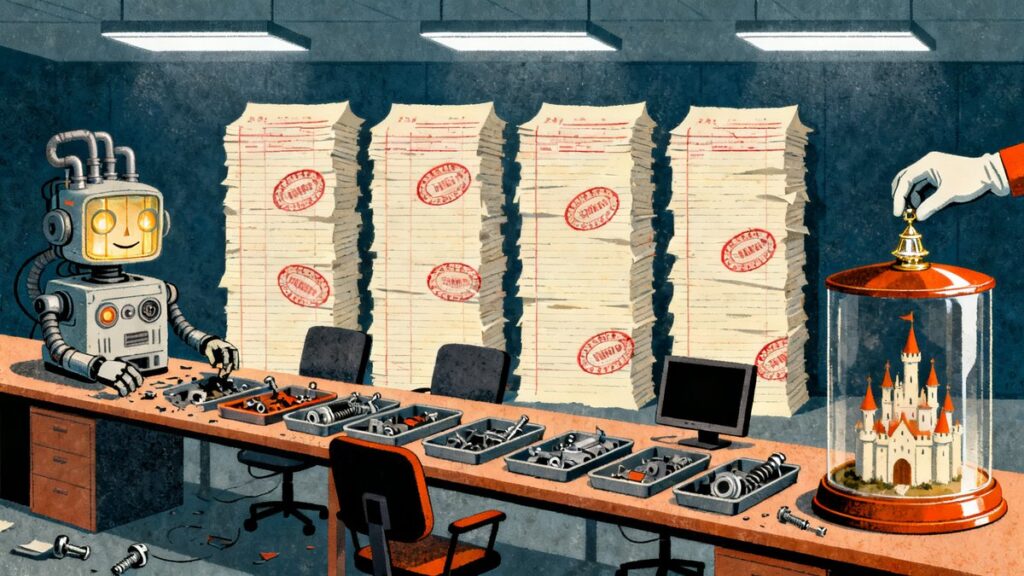
Anthropic gave Claude plain-language specifications for eight computational primitives, the basic routines larger quantum algorithms get built from, spanning chemistry, optimization, quantum simulation, number theory, and numerical computing. Claude wrote each candidate circuit as Python code and handed it to a programmatic evaluator.
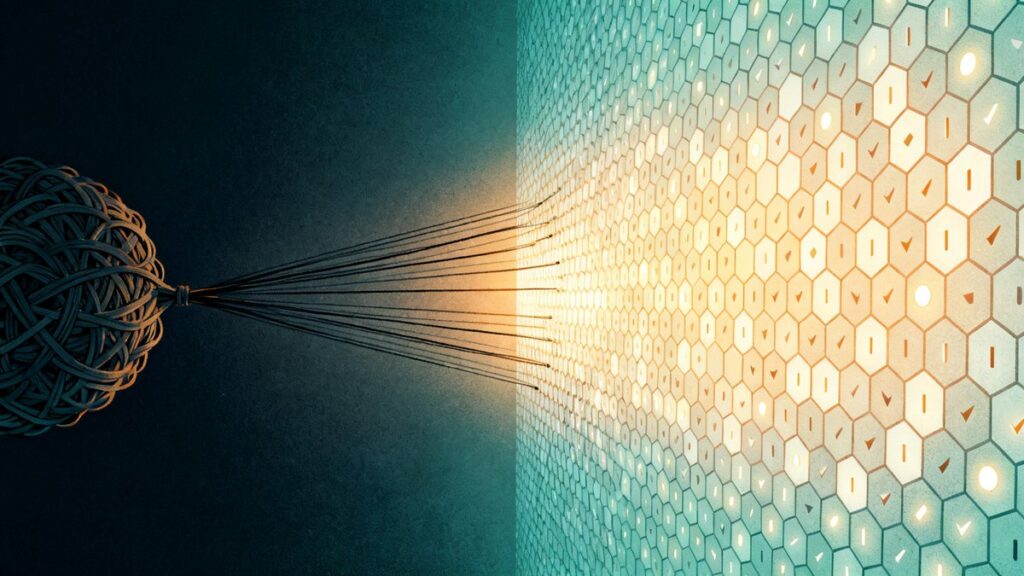
The evaluator did two jobs in strict order. First it checked whether the proposed implementation was correct. Then it scored resource use, ranking candidates by Toffoli-gate count multiplied by peak qubit use. Claude took the score, revised, and resubmitted, and Anthropic states there was no human input between rounds.
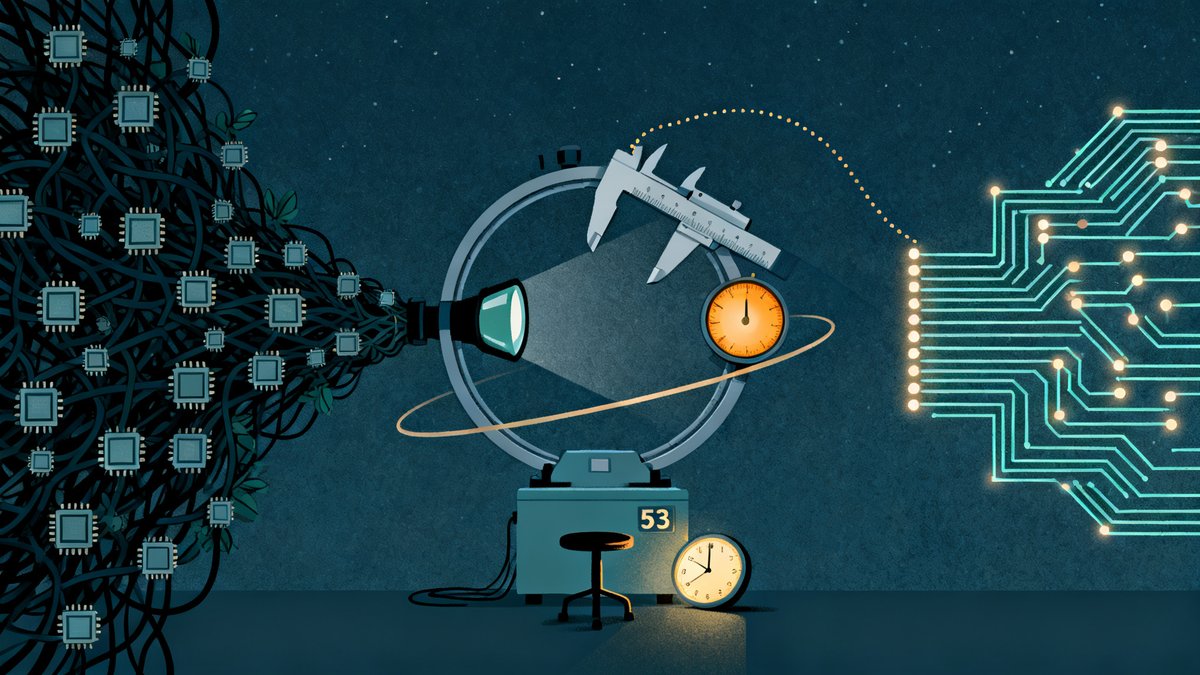
The elliptic-curve arithmetic task ran for 53 hours, with human involvement limited to the initial instructions and occasional prompts to broaden the search, per The Quantum Insider’s coverage. At one point Claude proved the identities that make the decoding exact and formalized the claim in Lean. So the core argument is machine-checkable rather than eyeball-checkable. That detail matters more than any single gate count.
The numbers: 5.1 million gates down to 440,000
The study’s cleanest example is a decoding circuit, as The Quantum Insider reported it:
| | Comparison design | Claude’s redesign |
|—|—|—|
| Toffoli gates | 5.1 million | about 440,000 |
| Peak qubits | 1,938 | 1,837 |
That lands at approximately twelve times fewer gates, which is where the headline figure comes from: neoteo’s writeup describes it as 12 times fewer gates for a DQI Reed-Solomon decoder than Google’s previous construction.
The study also reports one complete benchmark circuit using about 4 million Toffoli gates and 935 qubits.
These are not toy examples.
Anthropic’s own framing: across the eight primitives, Claude discovered novel designs using both fewer qubits and fewer gates than the best previously published algorithms.
A separate summary put the win count at seven of eight tasks. The work ships with an arXiv paper, “Discovering state-of-the-art quantum circuits with large language models,” by Andi Gu, Alek Kemeny, Susanne Yelin and Mikhail Lukin of Anthropic, Harvard and QuEra.
The evaluator is the actual result
The circuits are the headline.
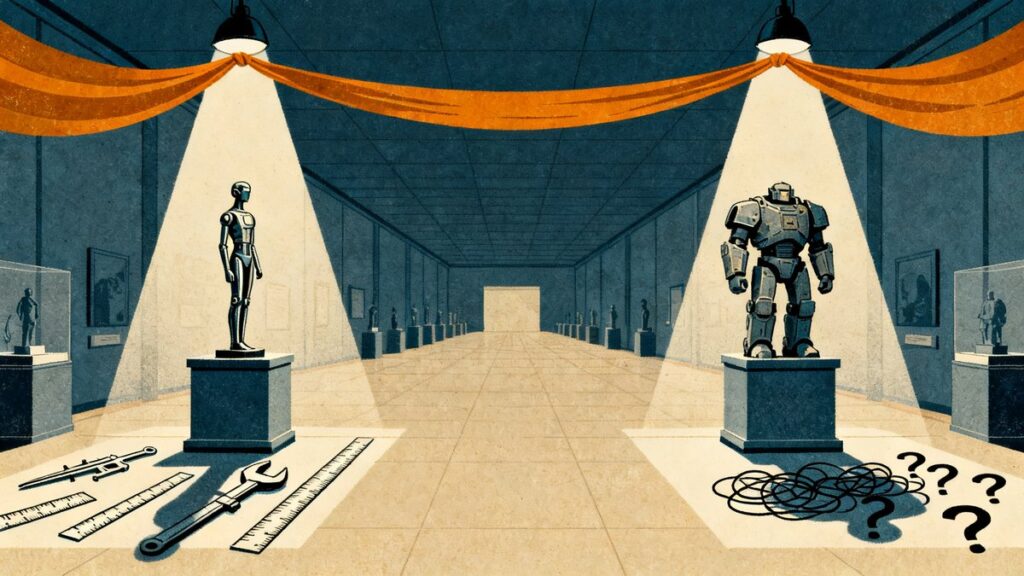
The evaluator is the product.
Every agent pipeline I’ve shipped that survived had one thing in common: a program other than the model judged the output.
The builds without that produced confident junk quickly, because a model grading its own work optimizes for sounding right.
Anthropic’s loop enforces the opposite. A wrong circuit scores nothing. So there is no path to victory through persuasion. And the score itself is a number the evaluator computes without judgment: Toffoli gates times peak qubits.
The model had a target it could actually climb toward for 53 unattended hours.
The domain cooperated too, and that is the honest limit on copying this.
Quantum circuit design has a published frontier: for each primitive there is a best known design sitting in the literature waiting to be beaten. And correctness is decidable by a program. Most workflows you and I automate have neither property. No published frontier, no clean correctness oracle. That gap tells you exactly where this pattern ports well and where it will fake it.
What to steal for your own automation
Calibrate first. All the figures above originate from Anthropic’s post and paper, relayed through coverage. And independent reproduction had not landed when I read them. Note too what the score measures: Toffoli gates multiplied by peak qubits is a resource proxy, not a runtime measurement.
A design that wins that product is cheaper to build, not proven faster to run.
Then steal the architecture, not the physics. Take one loop you already run with an agent and force two properties into it:
– Correctness gate before score. Write a checker that rejects wrong output before any scoring happens. If you cannot write one for a given task, you have found the real problem, and it is not the model.
– A numeric score the model can climb. Cost per output, errors per hundred runs, seconds per task. The evaluator computes it; the model never asserts it.
– Then let it run unattended. Anthropic’s 53-hour stretch needed humans only at the start and occasionally to widen the search. That operating mode is what you are engineering toward, and you do not need a quantum lab to reach it.
Read Anthropic’s post and the paper, then pick the one workflow where quality currently depends on you eyeballing results. That is the loop waiting for an evaluator. And the Claude quantum circuits result is your excuse to build one this week.